PRODUCTS
‹
›
‹
›
500L micro beer brewing equipment
PRODUCT DESCRIPTION
Detailed specification list
Main Feature
High-Volume Commercial Output with Strategic Batch Segmentation
· Established Microbreweries: Produce 2,500–4,000L/month (6–8 batches/week) — supply 15–20 taproom lines, 10–15 wholesale accounts, and 500+ bottles/cans per week for retail.
· High-Demand Brewpubs: Keep 12–15 core taps fully stocked and rotate 3–4 seasonal/experimental taps monthly—no more “tap dry” disappointments for regular customers.
· Regional Craft Brands: Lock in consistent distribution to a 50-mile radius (bars, restaurants, grocery stores) — 500L batches strike the perfect balance between delivery frequency (weekly) and inventory management (no overstocking slow-moving styles).Unlike 300L setups, 500L systems are optimized for core style scalability (brew 3–4 batches of your top-selling IPA in a single week) while still supporting experimental batches (brew a single 500L batch of pumpkin spice stout for fall, no need to split into smaller runs).
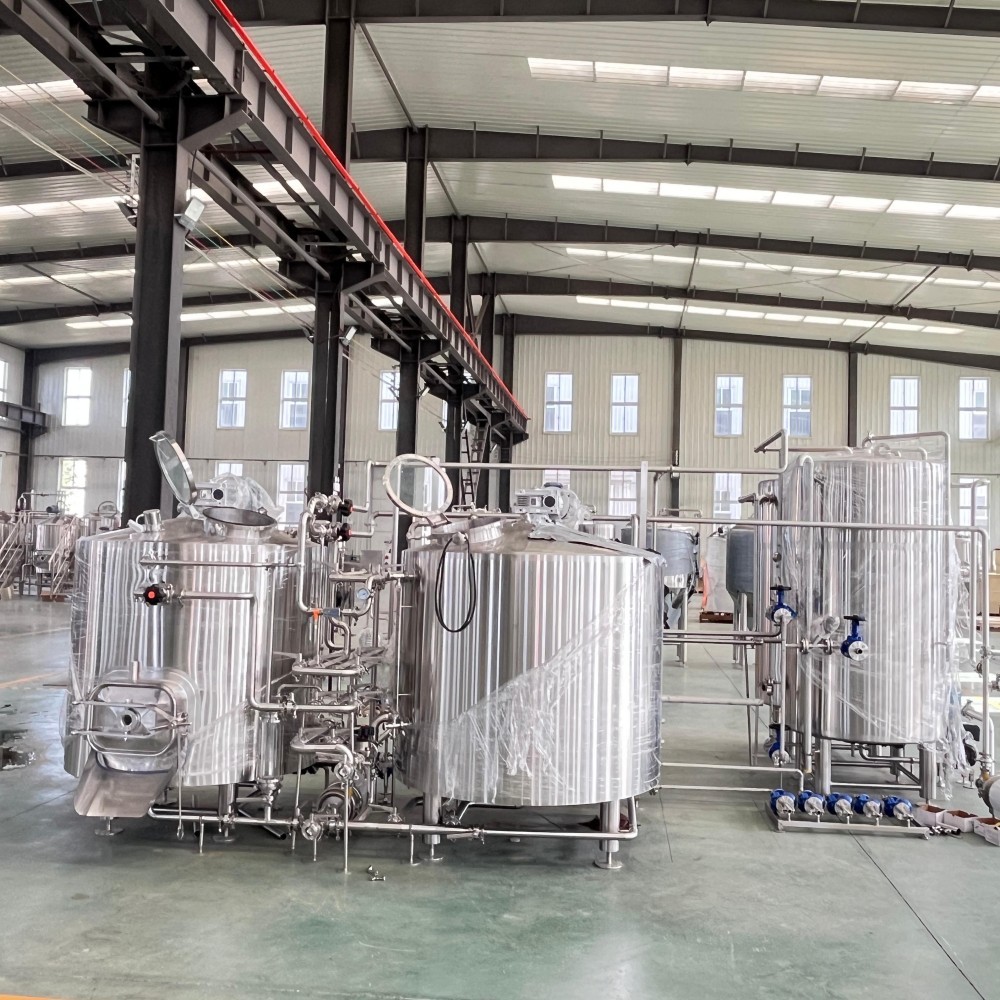
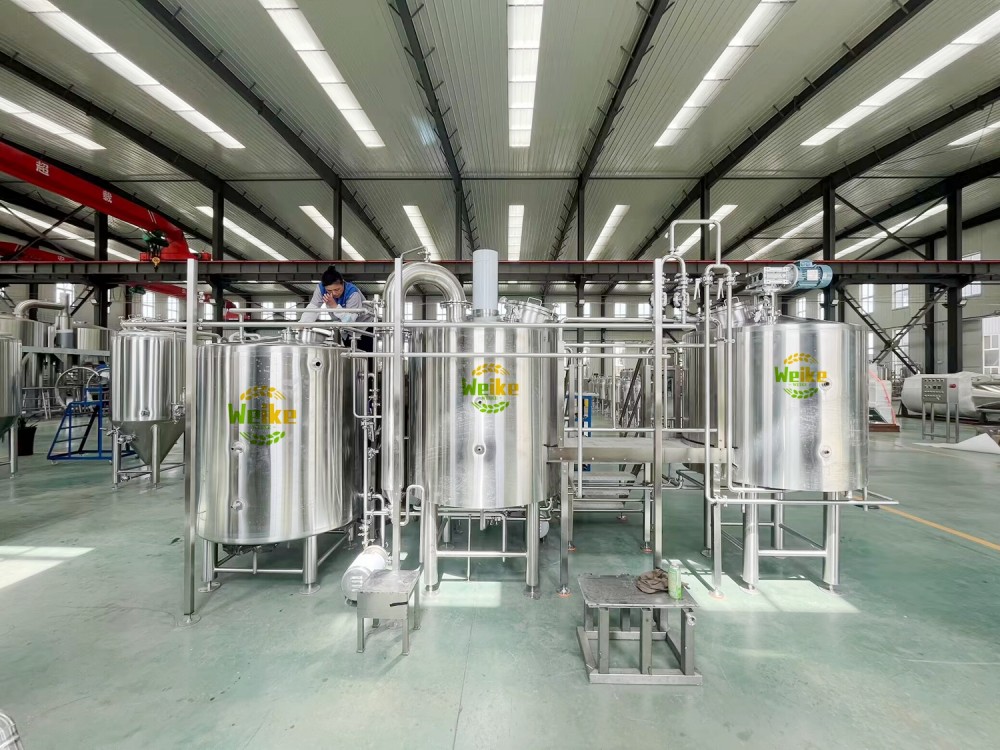
Industrial Modular Design: Fully Dedicated, Parallel-Processing Vessels (No Compromises)At 500L, modularity is taken to an industrial level—every step of the brewing process has its own dedicated, purpose-built vessel, and parallel processing is standard (not optional). This eliminates bottlenecks and cuts batch turnaround time by 50% compared to 300L setups. A standard full system includes:
· Grain Handling System (Dedicated): Commercial-grade grain mill + hopper + automated conveyer belt (feeds directly into mash tun) — no more manual grain lifting (500L batches use ~120kg of grain per run!) — critical for reducing labor strain.
· Mash Tun (500L) + Lauter Tun (500L): Fully separate, high-capacity vessels (wider lauter plates, deeper grain beds) — enables simultaneous mashing of a new batch while lautering and sparging the previous one (parallel processing at its best).
· Boil Kettle (500L) + Whirlpool Tank (Dedicated): A game-changer vs. 300L’s integrated whirlpool — the dedicated whirlpool tank lets you cool the wort while the next batch is boiling (cuts total process time by 25%). The boil kettle has industrial-grade heating and a large hop manway for high-hop IPAs.
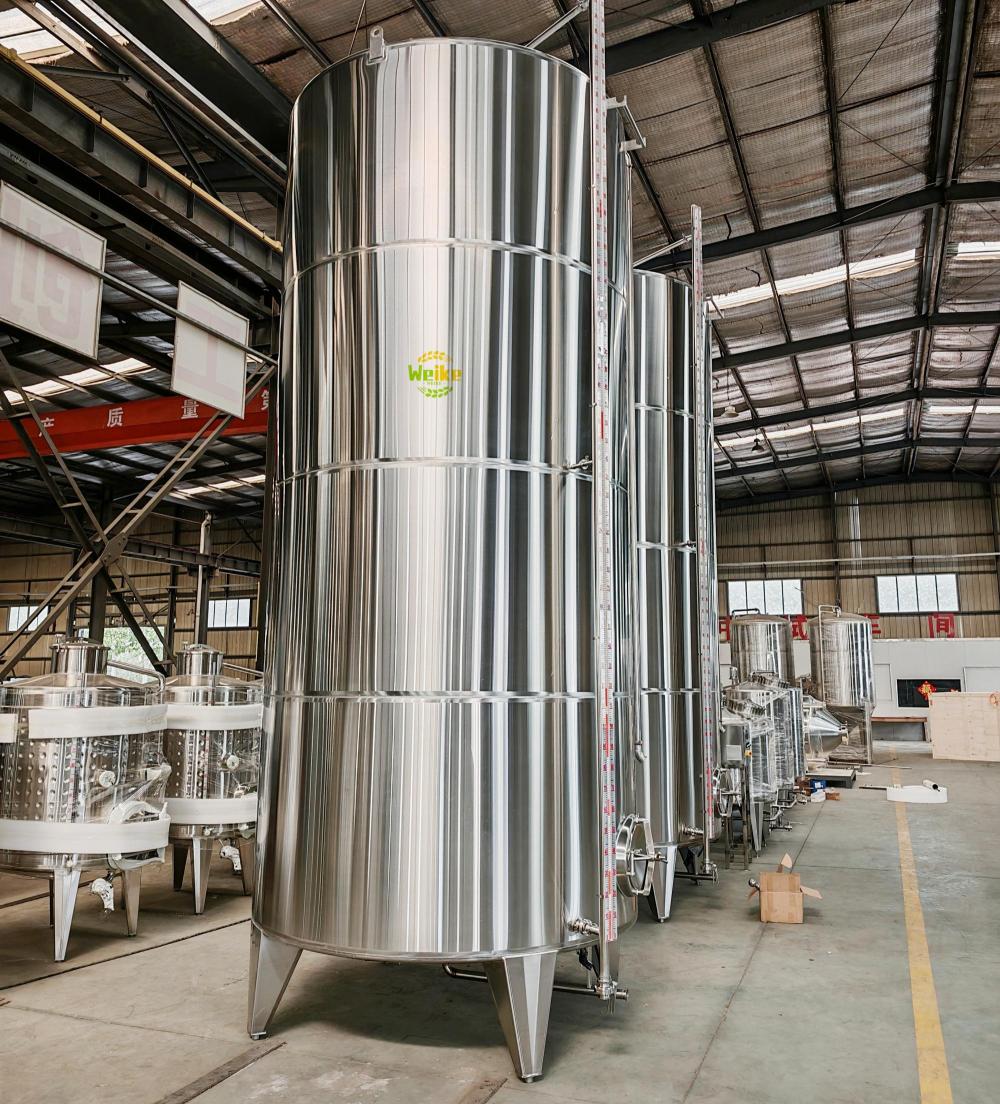
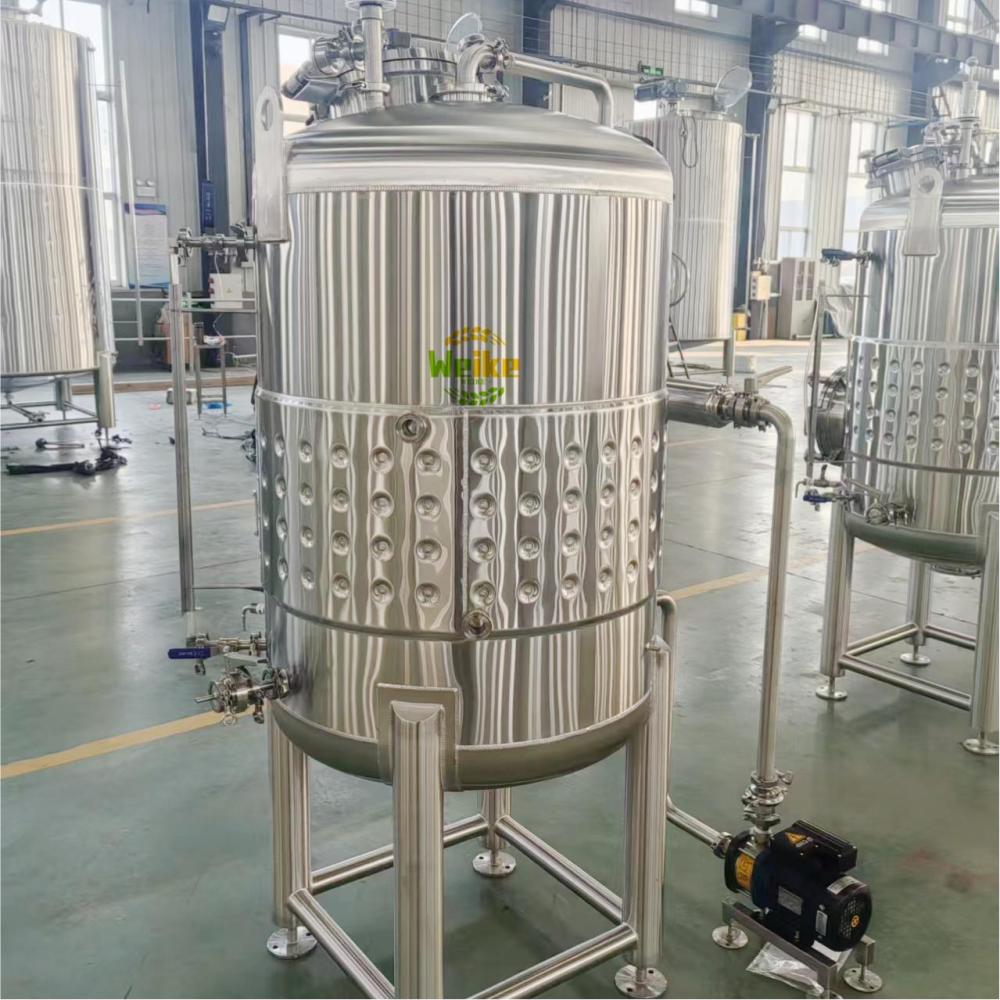
· Fermenters (500L, 8–12 units mandatory): Double-walled, vacuum-insulated, pressure-rated (3 bar) vessels — tri-zone cooling jackets (top/middle/bottom) + automated temperature profiling + CO₂ recovery systems (optional, for cost savings). Designed for simultaneous fermentation of 6–8 core batches and 2–4 experimental batches (zero cross-contamination, even with sours).
· Bright Tanks (500L, 4–6 units mandatory): Pressure-rated (4 bar) + vacuum-insulated + automated carbonation control + cold conditioning capabilities (0–4°C) — non-negotiable for commercial sales (extends shelf life by 4–6 weeks vs. 300L setups; ensures consistent carbonation for kegs, cans, and bottles).
· Mandatory Add-Ons: Industrial plate wort chiller (cools 500L of wort from 100°C to 18°C in 15 mins), automated CIP (Clean-in-Place) system with dedicated chemical tanks, keg/bottle/can filling line (semi-automated, for consistent packaging), and waste management system (for spent grain and trub).The modular design supports unlimited scalability: you can add a second mash/lauter line, more fermenters/bright tanks, or even a dedicated souring/barrel-aging wing without disrupting existing production (a critical feature for growing breweries).
Advanced Automation & PLC Control: Minimal Labor, Maximum Consistency500L systems are fully automated — manual operation is not just inefficient, it’s impossible for high-volume production. The goal is to let 2–3 brewers run an entire 500L setup (vs. 1–2 brewers for 300L) — reducing labor costs by 40% while ensuring 100% recipe repeatability (non-negotiable for wholesale customers who demand the same taste every time). Key control features:
· Industrial PLC (Programmable Logic Controller) with HMI Touchscreen: The brain of the system — a single touchscreen controls every step of the brewing process (grain milling, mashing, lautering, boiling, whirlpooling, cooling, fermentation, conditioning, packaging). You can store 100+ recipes (core + experimental) and recall them with one tap (no more manual recipe adjustments).
· Fully Automated Mash/Lauter/Boil Process: The PLC automates mash temperature ramps (with precise step mashing capabilities), vorlauf recirculation rate, sparging volume and speed, boil time, hop additions (timed and automated), whirlpool time, and wort cooling — reduces human error by 95% (vs. 80% for 300L systems).
· Smart Fermentation Control with Cloud Connectivity: Fermenters have quad-zone cooling jackets (top, upper-middle, lower-middle, bottom) + automated temperature profiling + CO₂ monitoring + cloud connectivity (via Wi-Fi/4G) — ensures perfect, uniform fermentation for any style (lagers, IPAs, sours, stouts). You can monitor and control every fermenter from your phone, laptop, or taproom tablet (even if you’re on vacation). Pressure control is fully automated (1–3 bar) for closed transfers, in-fermenter carbonation, and CO₂ recovery.
· Automated CIP System (Industrial Grade): Integrated CIP system with dedicated tanks for caustic soda, acid cleaner, and sanitizer — automates cleaning/sanitizing of all vessels, hoses, pumps, and fittings (20–30 minutes per batch, vs. 30–45 minutes for 300L systems) — critical for high-volume batch turnaround time. The system also automatically monitors cleaning chemical concentrations and alerts you when they need to be refilled.
· Semi-Automated Packaging Line: The keg/bottle/can filling line is semi-automated — it fills, seals, and labels packages with consistent volume and carbonation (no more overfilled/underfilled kegs or bottles) — reduces packaging time by 50% vs. manual filling (critical for high-volume retail sales).
Industrial Workflow Optimization: Designed for Speed, Not Just Space500L systems are larger than 300L gear, but they’re designed for industrial workflow efficiency — the layout is optimized to reduce bottlenecks, minimize movement, and maximize production speed. This means the footprint is larger, but it’s far more productive per square meter. Key space features:
· U-Shaped or Linear Production Line Layout (Industrial Standard): The standard layout is either linear (grain handling → mash/lauter → boil/whirlpool → cooling → fermenters → bright tanks → packaging) or U-shaped (fermenters/bright tanks in the center, production line around the perimeter) — both create a seamless, one-way workflow (no backtracking, no crossing hoses, no wasted movement) — critical for 2–3 brewers running 6–8 batches/week.
· Vertical Storage Optimization (Industrial Grade): Fermenters and bright tanks are designed for stacking 4–5 high (empty) or racking 3 high (full) — a dedicated industrial vertical rack system is included with all setups (vs. 3–4 high stacking for 300L systems) — reduces floor space by 50% compared to a horizontal layout.
· Industrial Footprint (Space-Smart for Commercial Use): A full setup (dedicated grain handling, mash/lauter, boil/whirlpool, 12 fermenters, 6 bright tanks, CIP system, packaging line, waste management) takes up only 15–20 square meters of floor space — about the size of a small retail store or a large warehouse bay (perfect for urban microbreweries with high rent costs, or rural breweries with plenty of land but limited building space).
Get a quote
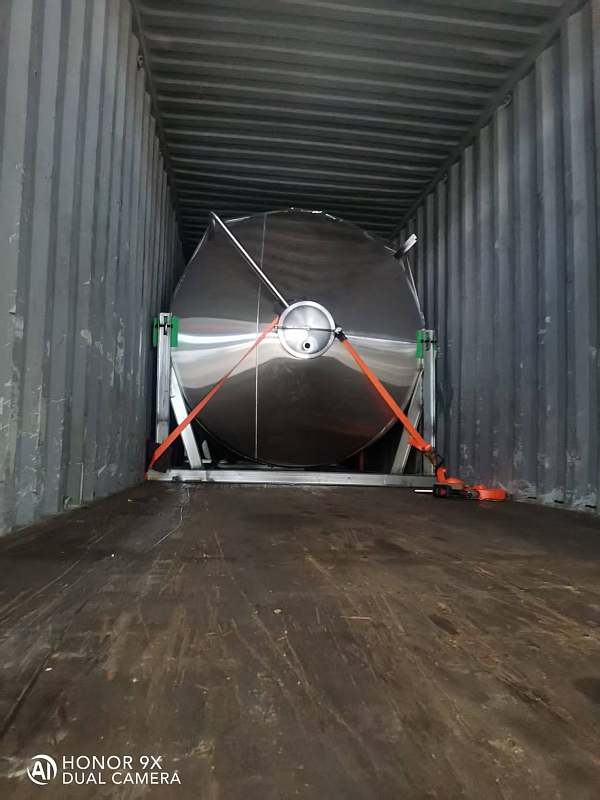
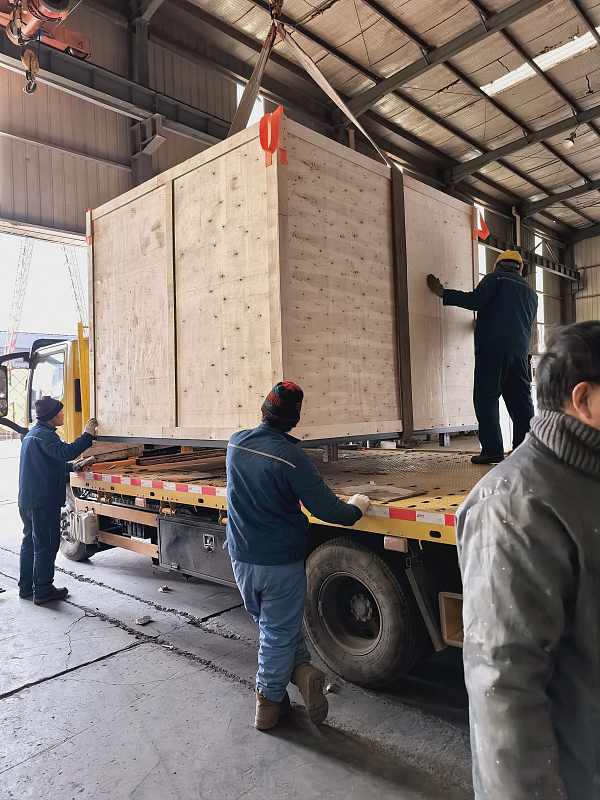
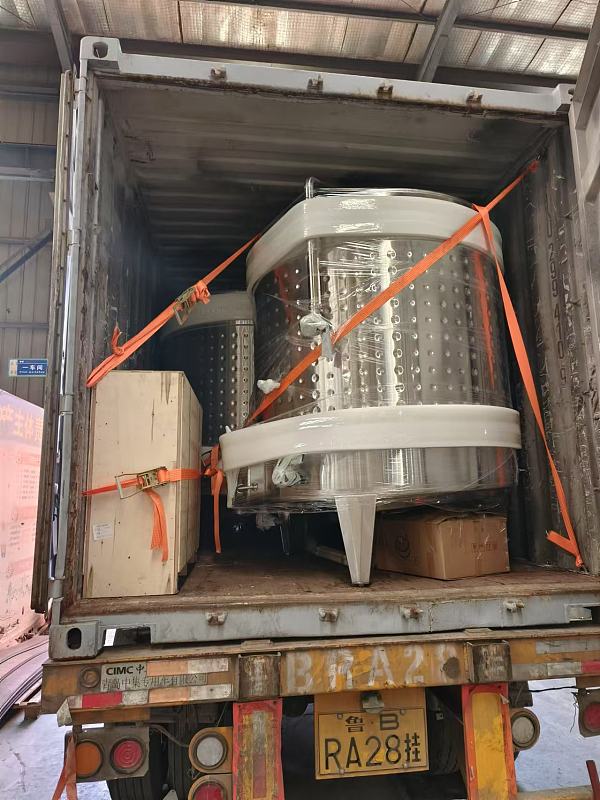
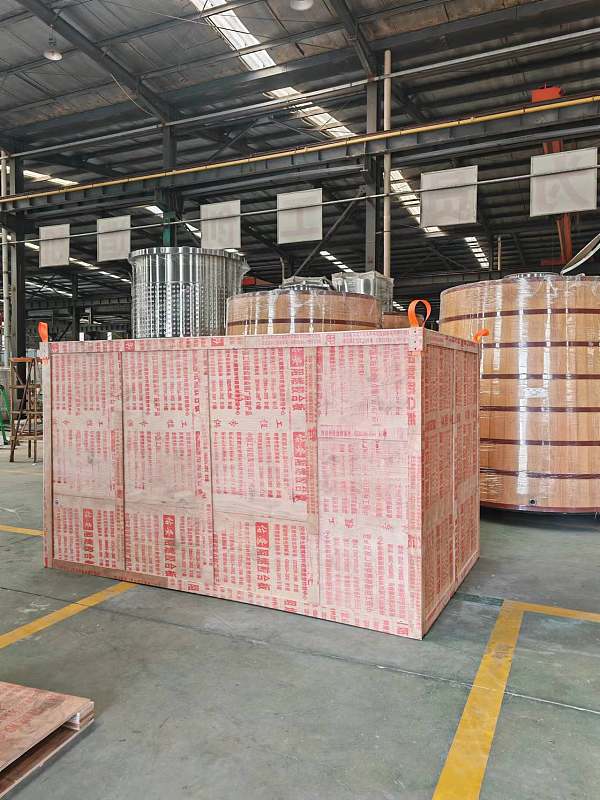
Packing and shipping