PRODUCTS
‹
›
‹
›
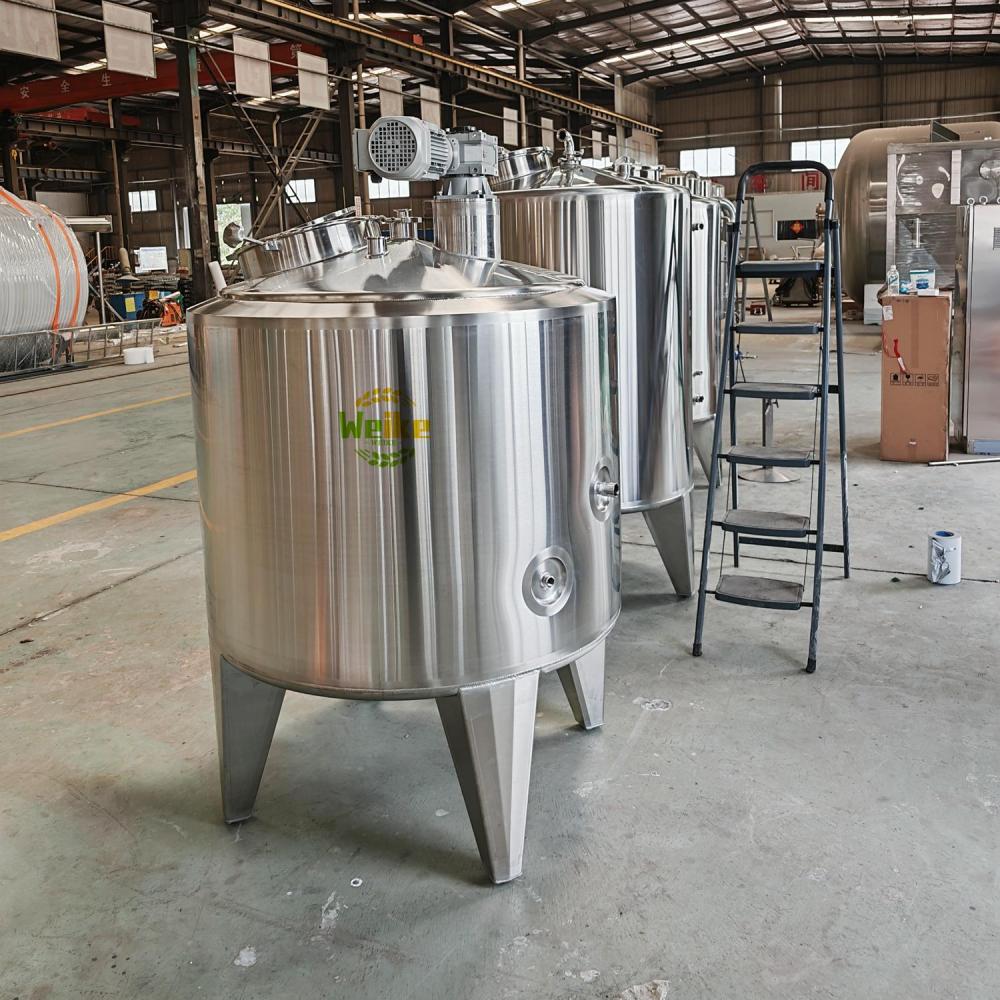
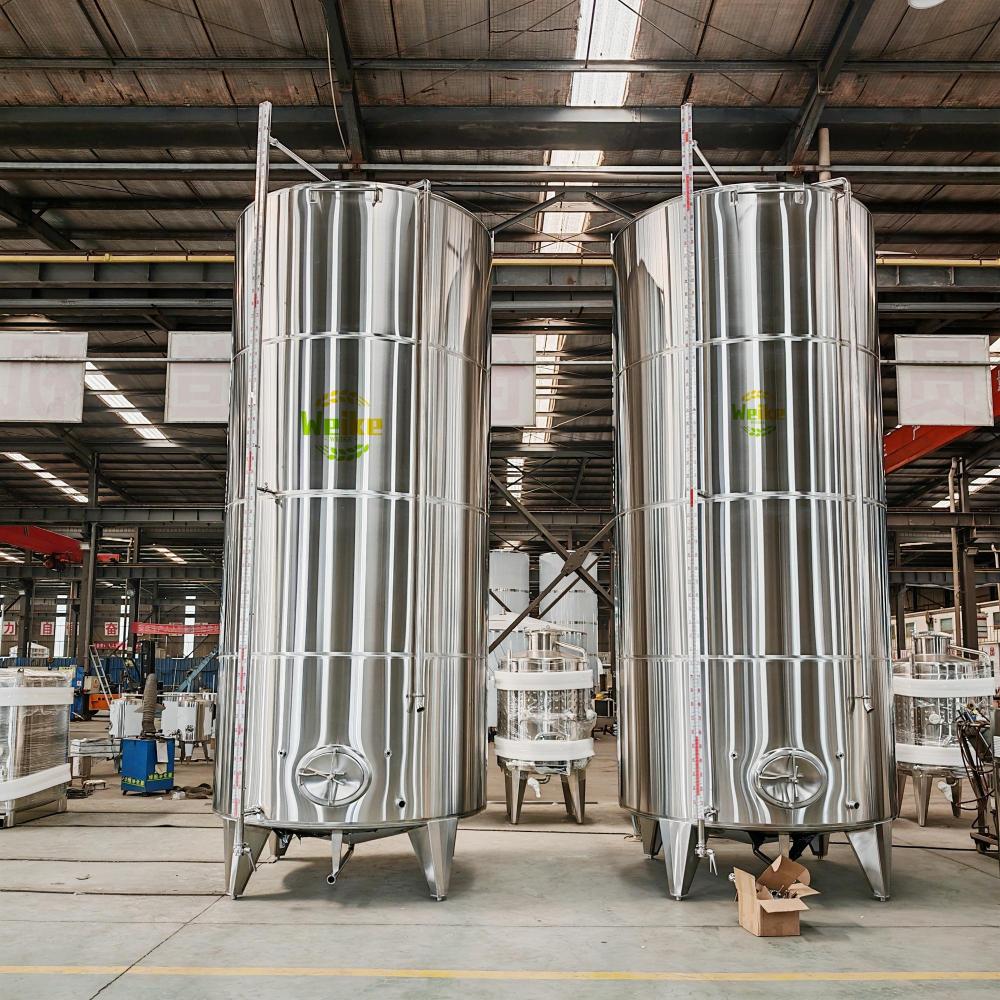
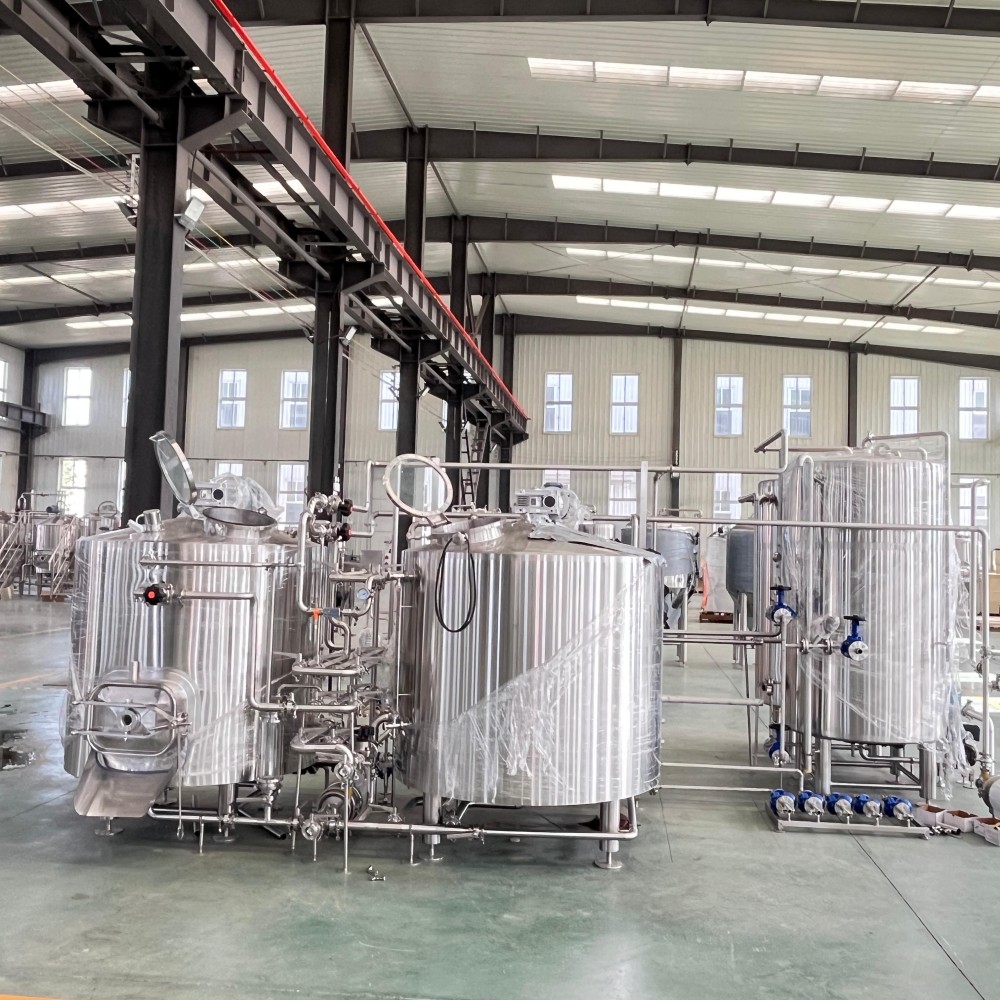
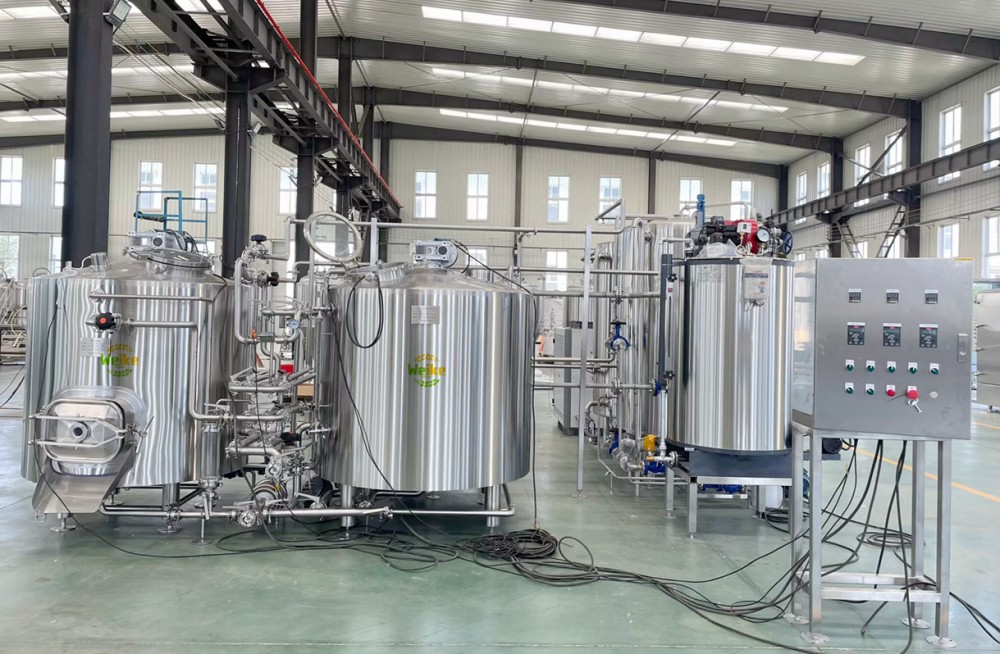
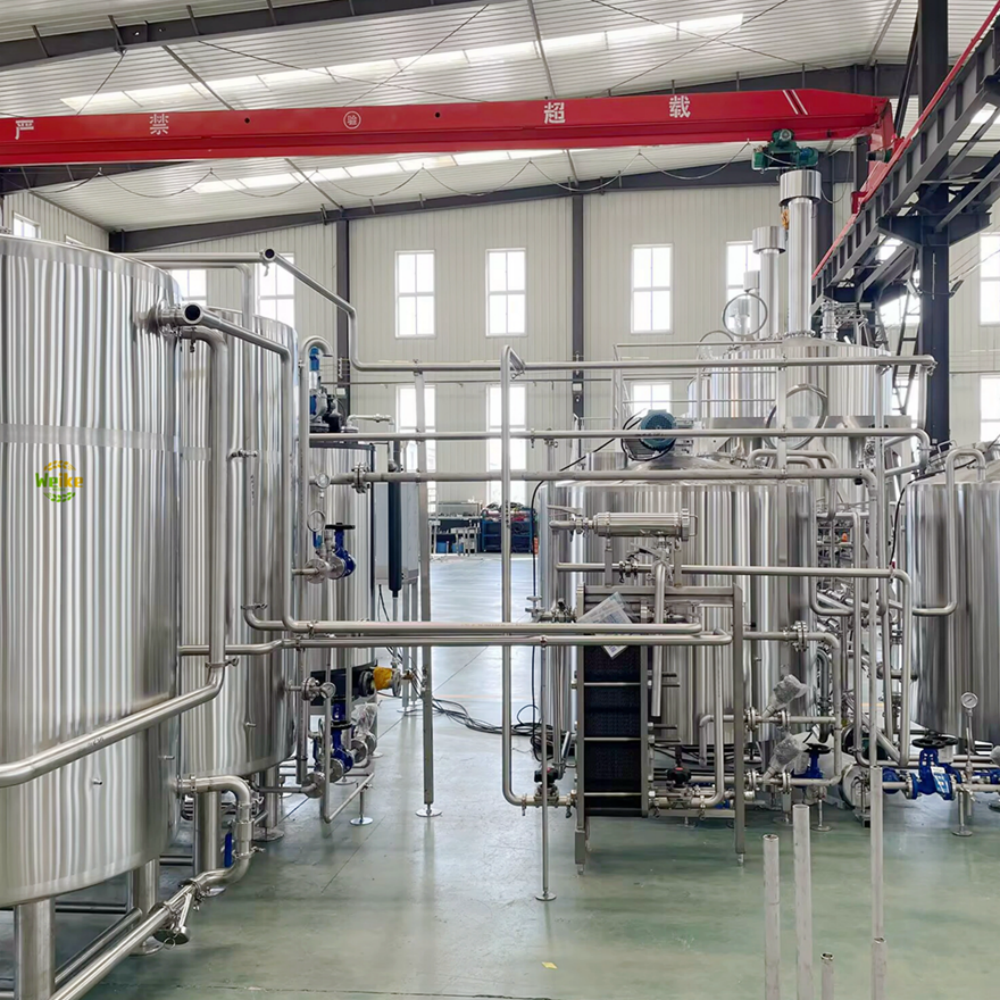
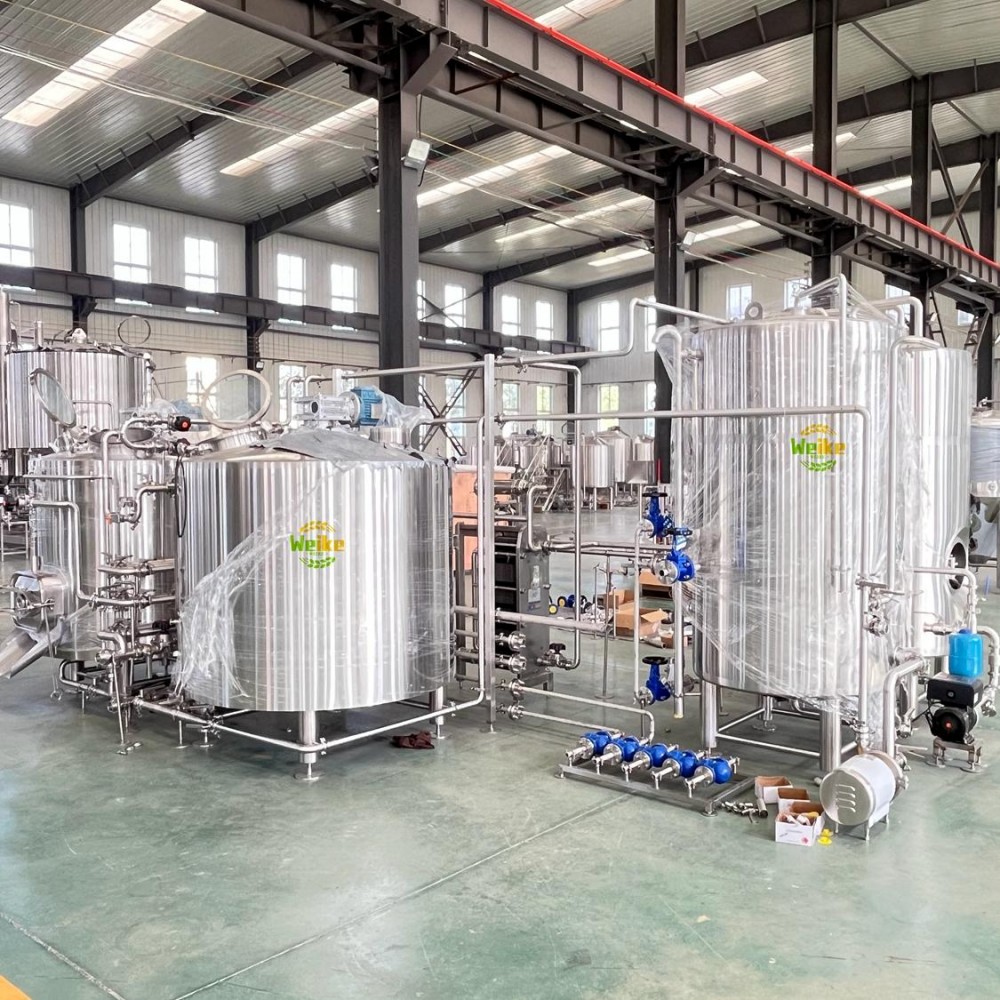
1000L three vessels beer brewery equipment
PRODUCT DESCRIPTION
it’s built for round-the-clock operation (10–12 batches/week) and designed to minimize downtime, while still offering enough flexibility to brew seasonal and limited-edition runs. A 1000L batch yields ~264 gallons of beer—enough to keep your core lineup in constant supply across a wide region, with zero risk of stockouts.
Detailed specification list
Main Feature
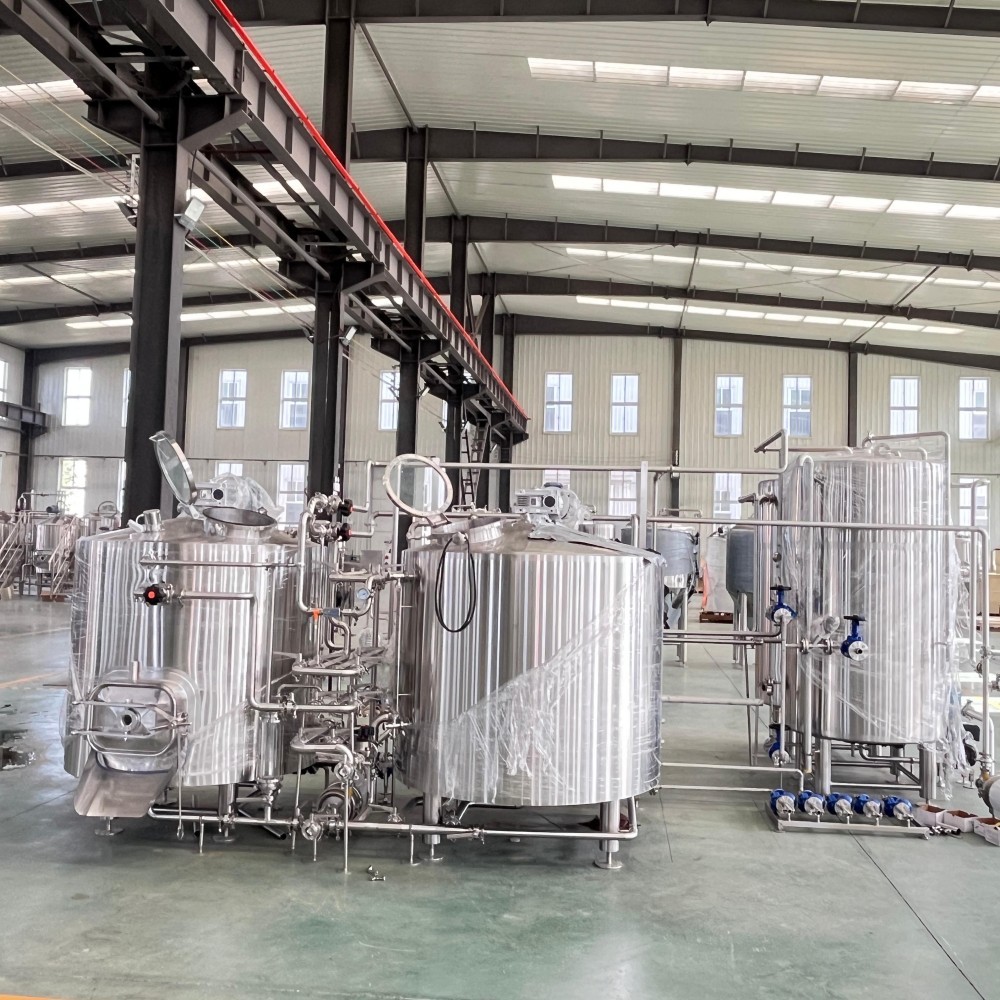
Enterprise Modular Design: Dual-Line Parallel Processing, Fully Integrated Systems (No Bottlenecks)At 1000L, modularity evolves into dual-line parallel processing—the system includes two complete brewing lines (mash/lauter → boil/whirlpool → cooling) that can run simultaneously, plus a massive bank of fermenters and bright tanks. This eliminates all bottlenecks and lets you double production capacity without adding extra floor space. A standard full system includes:
· Automated Grain Handling System (Enterprise Grade): Commercial-grade grain mill (dual-roller, high-capacity) + large hopper (1–2 tons of grain) + automated conveyer belt + grain silo (optional, for on-site storage of 5+ tons of grain) — no more manual grain handling (1000L batches use ~240kg of grain per run!) — critical for reducing labor strain and increasing production speed.
· Dual Mash Tun (1000L) + Dual Lauter Tun (1000L): Two complete sets of dedicated, high-capacity vessels (wider lauter plates, deeper grain beds, automated rakes for lautering) — enables two batches to be mashed and lautered simultaneously (parallel processing at the enterprise level) — cuts total process time by 50% compared to 500L single-line setups.
· Dual Boil Kettle (1000L) + Dual Whirlpool Tank (Dedicated): Two complete sets of boil kettles and dedicated whirlpool tanks — lets two batches be boiled and whirlpooled simultaneously (while the next two batches are being mashed/lautered) — the ultimate in parallel processing. The boil kettles have industrial-grade heating (natural gas/propane, 500,000+ BTU) and large hop manways for high-hop IPAs (up to 20 lbs of hops per batch).
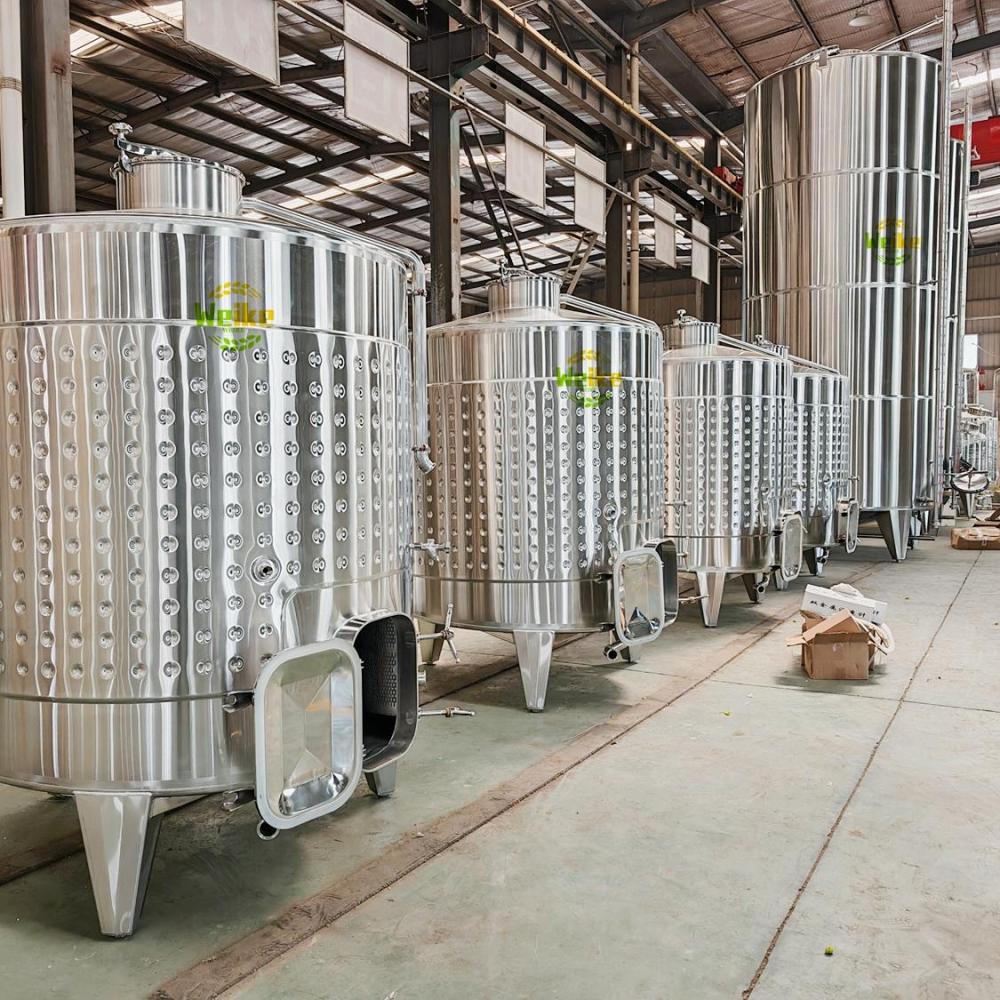
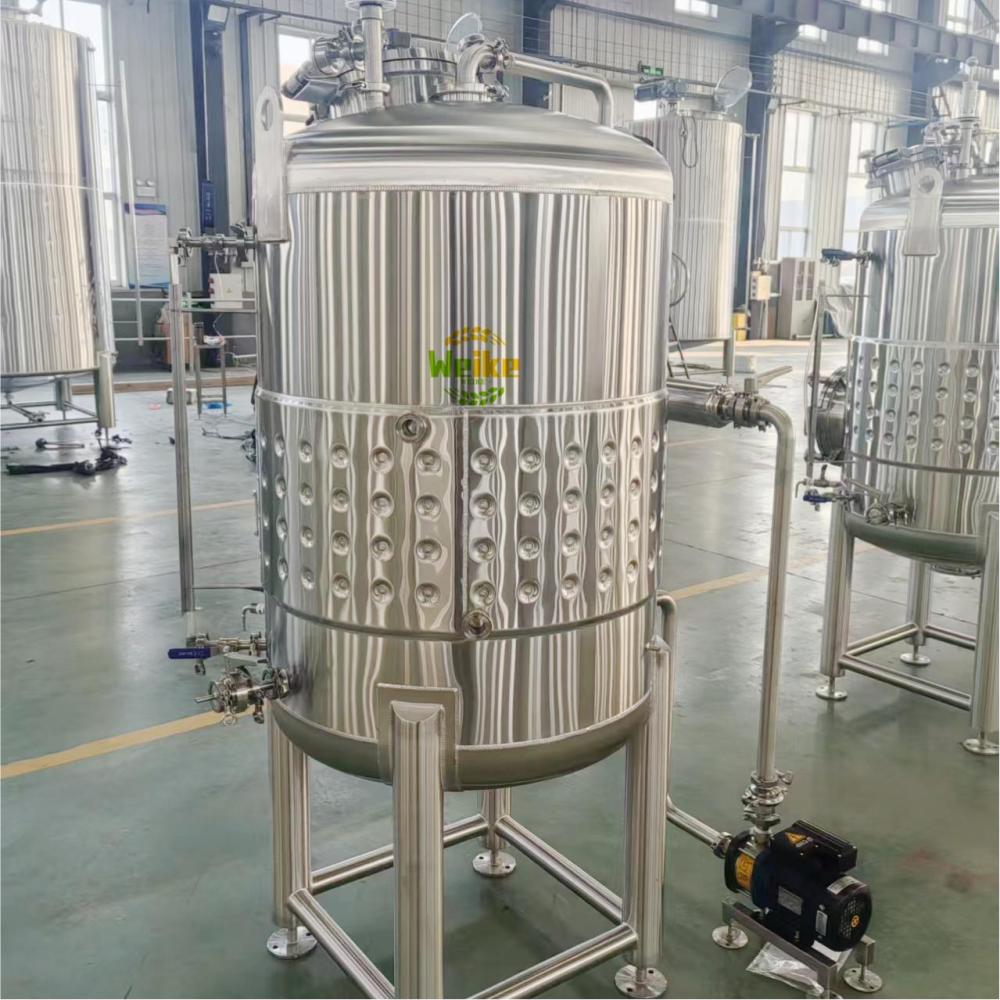
· Fermenters (1000L, 20–30 units mandatory): Double-walled, vacuum-insulated, pressure-rated (4 bar) vessels — quad-zone cooling jackets with independent temperature control (top, upper-middle, lower-middle, bottom) + automated temperature profiling + CO₂ recovery systems (standard, for cost savings) + CIP cleaning ports (integrated). Designed for simultaneous fermentation of 15–20 core batches and 5–10 limited-edition/seasonal batches (zero cross-contamination, even with sours and barrel-aged beers).
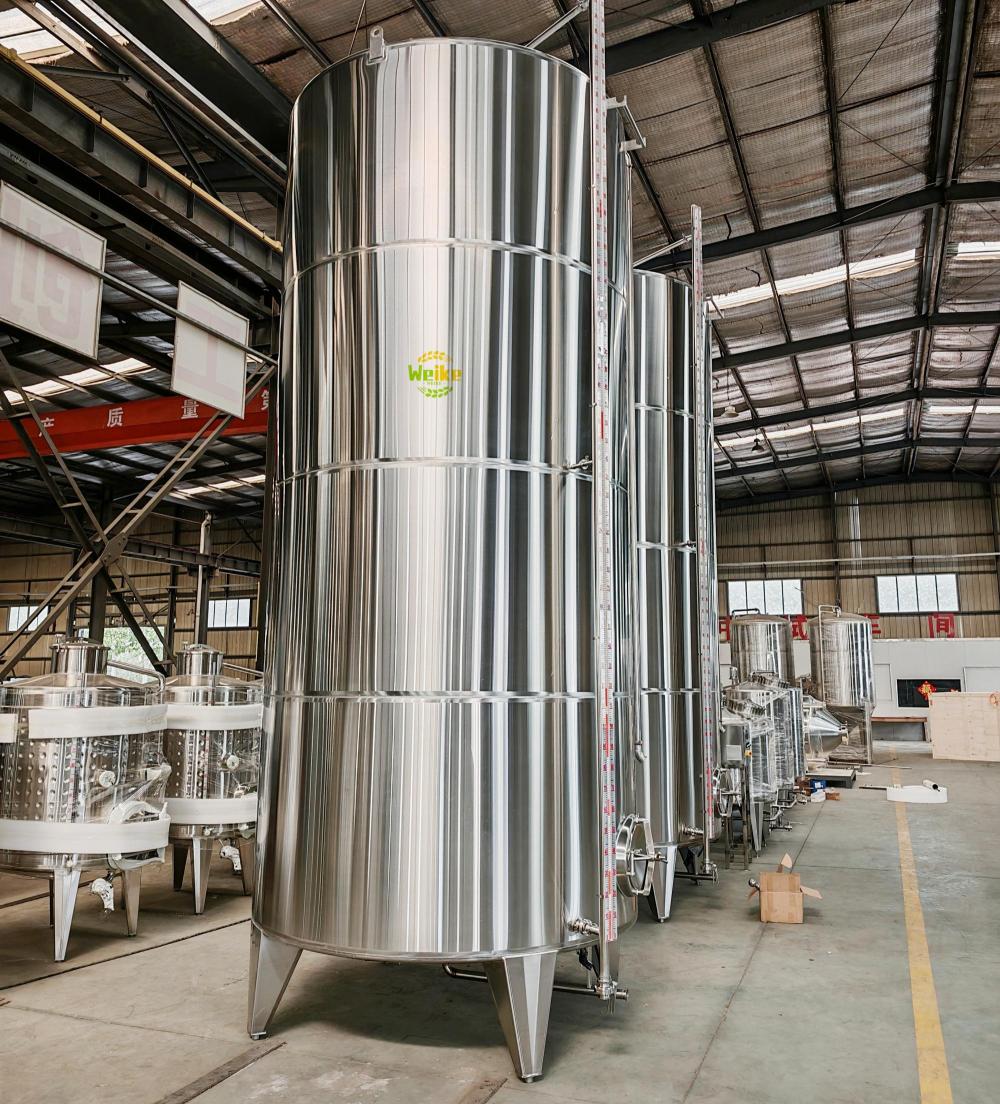
Bright Tanks (1000L, 10–15 units mandatory): Pressure-rated (5 bar) + vacuum-insulated + automated carbonation control + cold conditioning capabilities (0–4°C for 4–8 weeks) + integrated CIP ports — non-negotiable for enterprise-level sales (extends shelf life by 8–12 weeks vs. 500L setups; ensures consistent carbonation for kegs, cans, bottles, and even draft lines in grocery stores).
Mandatory Add-Ons: Industrial plate wort chiller (dual units, cools 1000L of wort from 100°C to 18°C in 20 mins), enterprise-grade automated CIP system (with dedicated chemical tanks, automated chemical mixing, and remote monitoring), fully automated packaging line (keg/bottle/can/growler, with integrated labeling, coding, and case packing), waste management system (for spent grain, trub, and cleaning chemicals — includes a dedicated spent grain dryer for selling to local farms), and quality control lab (with equipment for testing gravity, pH, alcohol content, and hop levels — mandatory for enterprise-level consistency).The modular design supports unlimited enterprise scalability: you can add more brewing lines, more fermenters/bright tanks, a dedicated souring/barrel-aging wing, a canning line with shrink wrap, or even a distribution center without disrupting existing production (a critical feature for growing regional breweries).
Enterprise-Grade Industrial Construction: Built for 25+ Years of Round-the-1000L equipment is engineered for extreme, continuous enterprise-level use (10–12 batches/week, 600+ batches/year) — construction quality is the highest available, with zero corners cut. Key features:
Ultra-Thick Walls + Reinforced Structural Frames (Enterprise Grade): 2.5–3.0mm wall thickness (vs. 2.0–2.5mm for 500L) + heavy-duty stainless steel frames with cross-bracing and reinforced legs — prevents bulging under full wort weight (1000L of wort weighs ~1200kg!) and improves vacuum insulation (reduces energy costs by 20% vs. 500L systems). The frames are also designed to withstand earthquakes and other natural disasters (critical for breweries in high-risk regions).
Enterprise-Grade Automation & SCADA Control: Minimal Labor, Maximum Consistency, Remote Monitoring & Diagnostics1000L systems are fully automated with enterprise-grade SCADA control — manual operation is not just inefficient, it’s impossible for enterprise-level production. The goal is to let 3–4 brewers + 1 quality control technician run an entire 1000L setup (vs. 2–3 brewers for 500L) — reducing labor costs by 50% while ensuring 100% recipe repeatability (non-negotiable for regional grocery store chains and wholesale accounts). Key control features:
Enterprise-Grade SCADA (Supervisory Control and Data Acquisition) System with HMI Touchscreens: The brain of the system — a single SCADA system controls every step of the brewing process across all lines (grain milling, mashing, lautering, boiling, whirlpooling, cooling, fermentation, conditioning, packaging, quality control) — and integrates with your brewery’s inventory management, sales, and distribution systems. You can store 500+ recipes (core + limited-edition + seasonal) and recall them with one tap (no more manual recipe adjustments). The SCADA system also collects real-time data on production, energy usage, water usage, and labor costs — critical for enterprise-level cost management and optimization.
Smart Fermentation Control with Enterprise Cloud Connectivity & Predictive Maintenance: Fermenters have quad-zone cooling jackets with independent temperature control + automated temperature profiling + CO₂ monitoring + pressure control + enterprise cloud connectivity (via Wi-Fi/4G/5G) + predictive maintenance (the system uses AI to monitor the condition of the fermenters, and alerts you before a problem occurs — e.g., a cooling jacket that is starting to leak, or a pressure valve that is wearing out). This ensures perfect, uniform fermentation for any style (lagers, IPAs, sours, stouts, barrel-aged beers) — and reduces downtime by 80% (vs. 500L systems). Pressure control is fully automated (1–4 bar) for closed transfers, in-fermenter carbonation, CO₂ recovery, and even blanketing of packaged products.
Enterprise-Grade Workflow Optimization: Designed for Enterprise Speed & Scalability, Not Just Space1000L systems are larger than 500L gear, but they’re designed for enterprise-grade workflow efficiency and scalability — the layout is optimized to reduce bottlenecks, minimize movement, maximize production speed, and accommodate future growth. This means the footprint is larger, but it’s far more productive per square meter
Enterprise Footprint (Scalable for Future Growth): A full setup (dual brewing lines, 30 fermenters, 15 bright tanks, enterprise CIP system, fully automated packaging line, quality control lab, grain silo, spent grain dryer, waste management system) takes up only 30–40 square meters of floor space — about the size of a large warehouse bay or a small retail store (perfect for urban regional breweries with high rent costs, or rural breweries with plenty of land but limited building space). The layout is also designed to be scalable
Get a quote
Packing and shipping