PRODUCTS
‹
›
‹
›
Industrial beer brewing equipment
PRODUCT DESCRIPTION
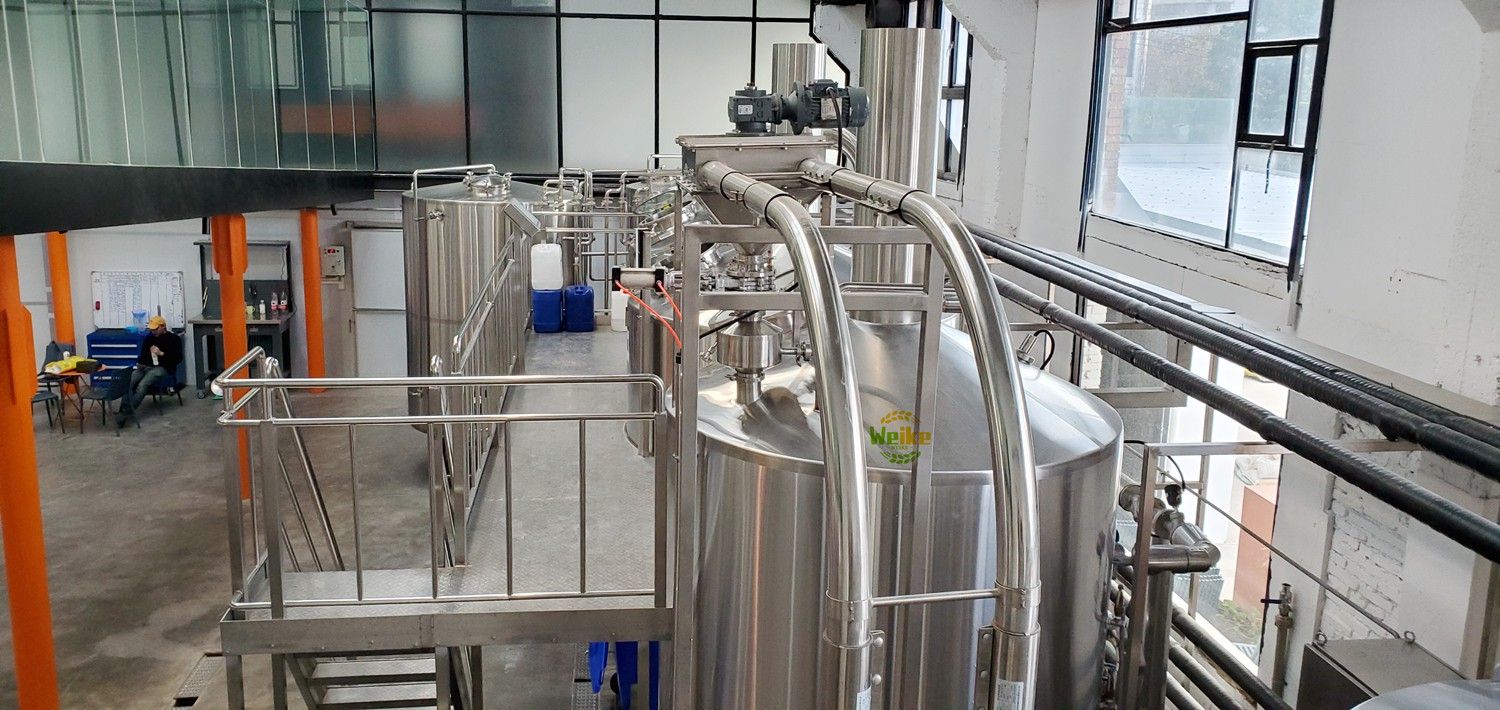
industrial-scale production with enterprise-level redundancy, efficiency, and scalability—built for 24/7 operation (15–20 batches/week) with zero tolerance for downtime. Unlike smaller 1000L systems, 2000L setups are designed with redundant components as standard (no single point of failure) and optimized for mass-market consistency, while still retaining dedicated capacity for premium limited-edition runs.
Detailed specification list
Main Feature
Industrial-Grade Production Volume with Core Standardization & Premium Batch SegmentationThe defining trait: 2x the output of 1000L, 4x that of 500L—optimized for full-scale core style standardization (brewed in continuous back-to-back runs for statewide/national supply) with dedicated, isolated premium batches (limited-edition, barrel-aged, or specialty styles) that never disrupt core production. Practical use cases:.
Large Contract Brewing Facilities: Offer mass-batch contract services for established national brands (2000L is the sweet spot for national distribution) + dedicated isolated lines for craft startup brands testing large-scale production.Unlike 1000L systems, 2000L setups use batch segmentation by line (core styles on dedicated lines, premium styles on isolated lines) — no cross-contamination, no schedule conflicts, and full traceability for every batch (mandatory for national grocery chains).
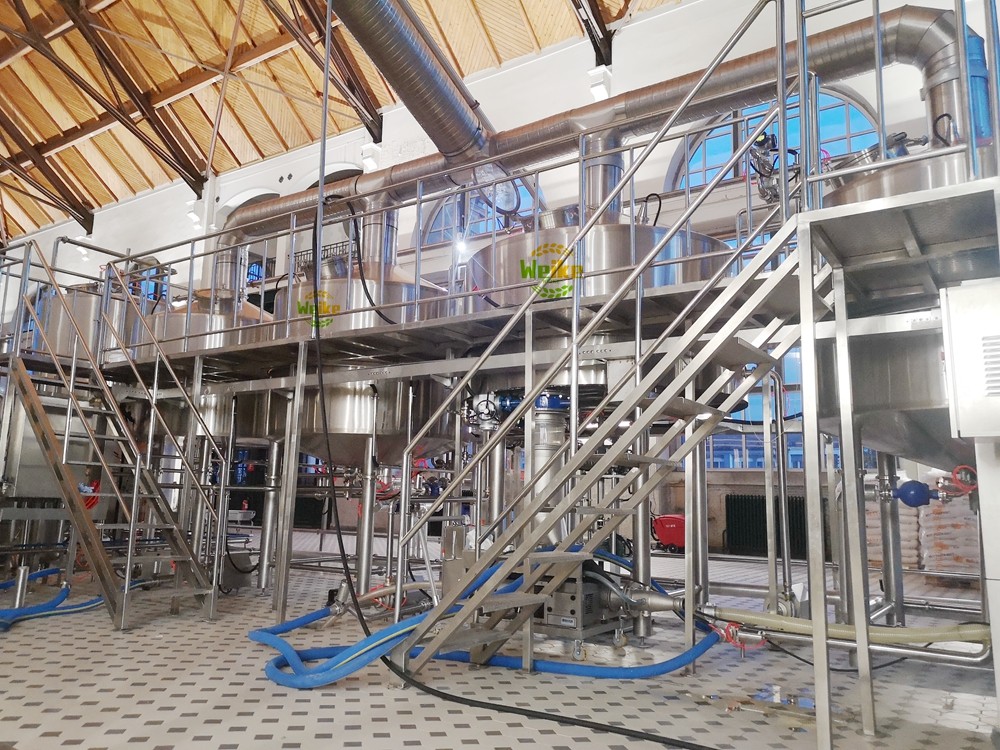
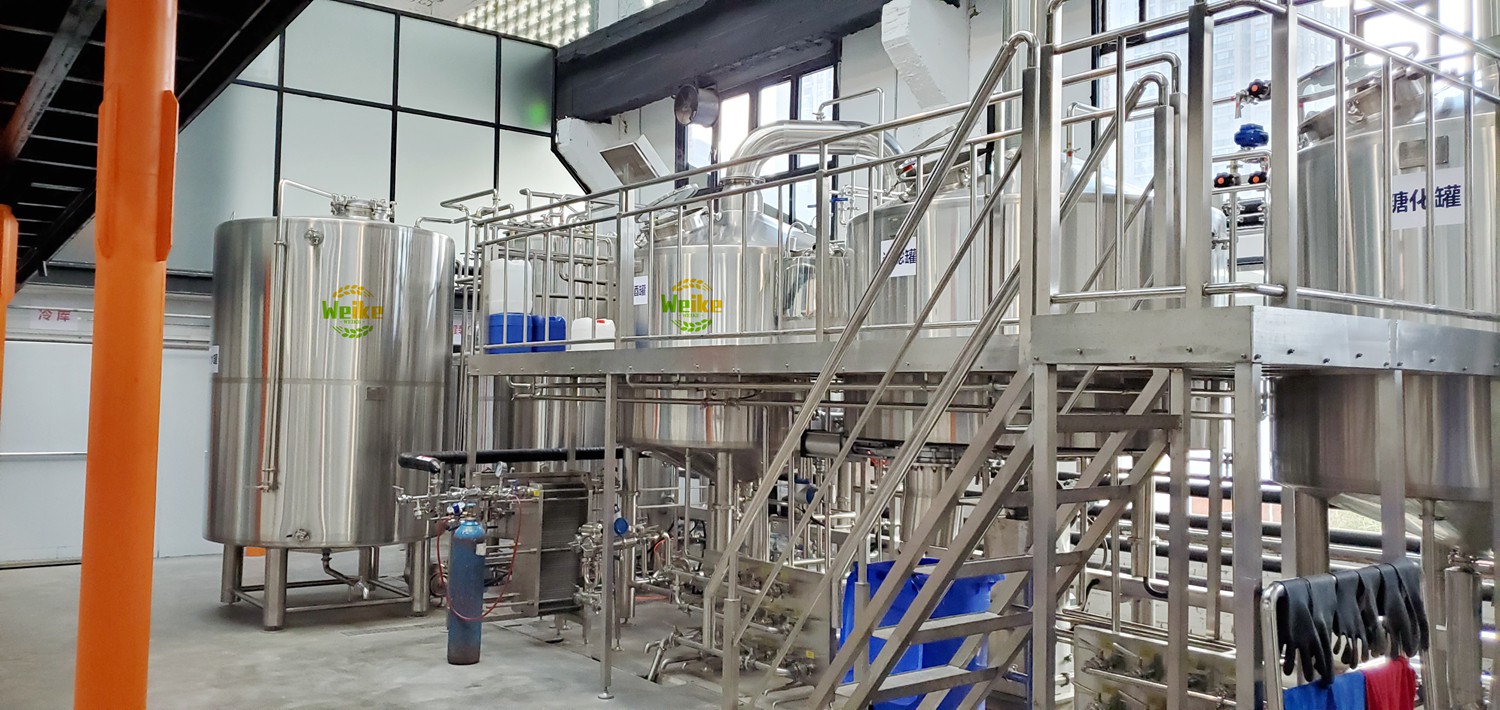
· Industrial Modular Design: Redundant Dual-Line Parallel Processing + Isolated Premium Lines (No Bottlenecks, No Single Point of Failure)At 2000L, redundancy is standard—the system includes two fully redundant core brewing lines (each capable of handling full production on its own) + 1–2 isolated premium lines (for limited-edition/sour/barrel-aged styles). This eliminates all bottlenecks and ensures production continues even if one line is down for maintenance. A standard full system includes:
· · Automated Grain Handling System (Industrial Silo Grade): Dual high-capacity grain mills (redundant) + 5–10 ton grain silos (with automated moisture/temperature monitoring) + automated conveyer belts + grain weighing systems (precision to 100g) — no more manual grain handling (2000L batches use ~480kg of grain per run!) — critical for 24/7 operation.
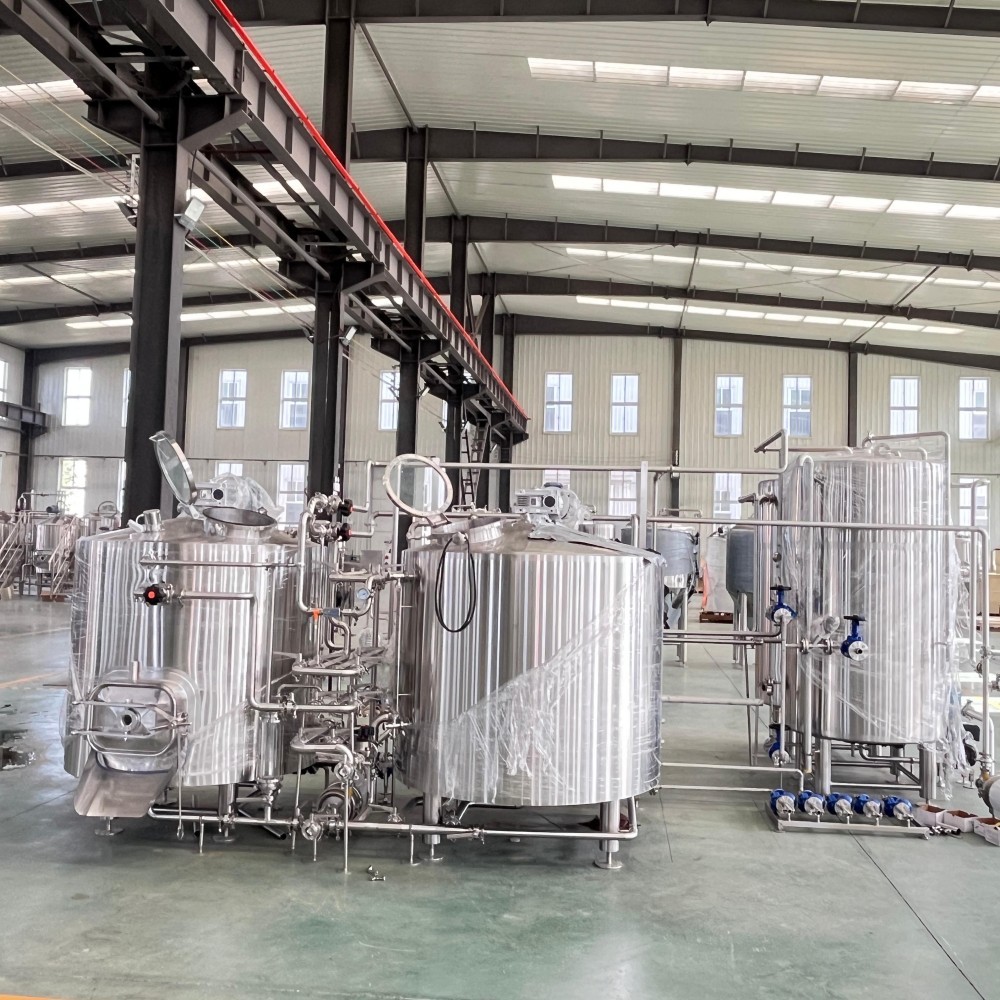
· Redundant Dual Mash Tun (2000L) + Dual Lauter Tun (2000L) + Isolated Premium Mash/Lauter Tanks (2000L): Two fully redundant core sets of dedicated vessels (wider lauter plates, automated rakes, deep grain beds) + 1–2 isolated premium sets (for sour/specialty styles with separate hoses/fittings) — enables two core batches to be mashed/lautered simultaneously, plus one premium batch, with zero cross-contamination.
· Redundant Dual Boil Kettle (2000L) + Dual Whirlpool Tank (Dedicated) + Isolated Premium Boil/Whirlpool Tanks: Two redundant core boil systems (industrial natural gas/propane heating, 1,000,000+ BTU, large hop manways for 20–40 lbs of hops per batch) + isolated premium systems — lets two core batches boil/whirlpool while one premium batch processes, with redundant heating elements to avoid downtime.
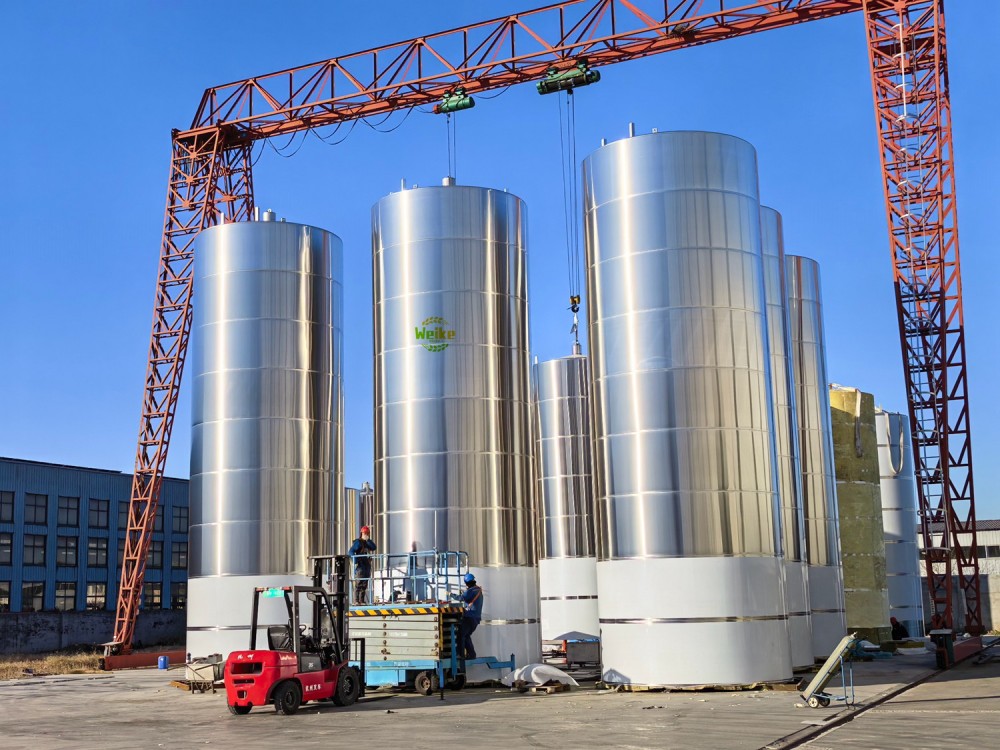
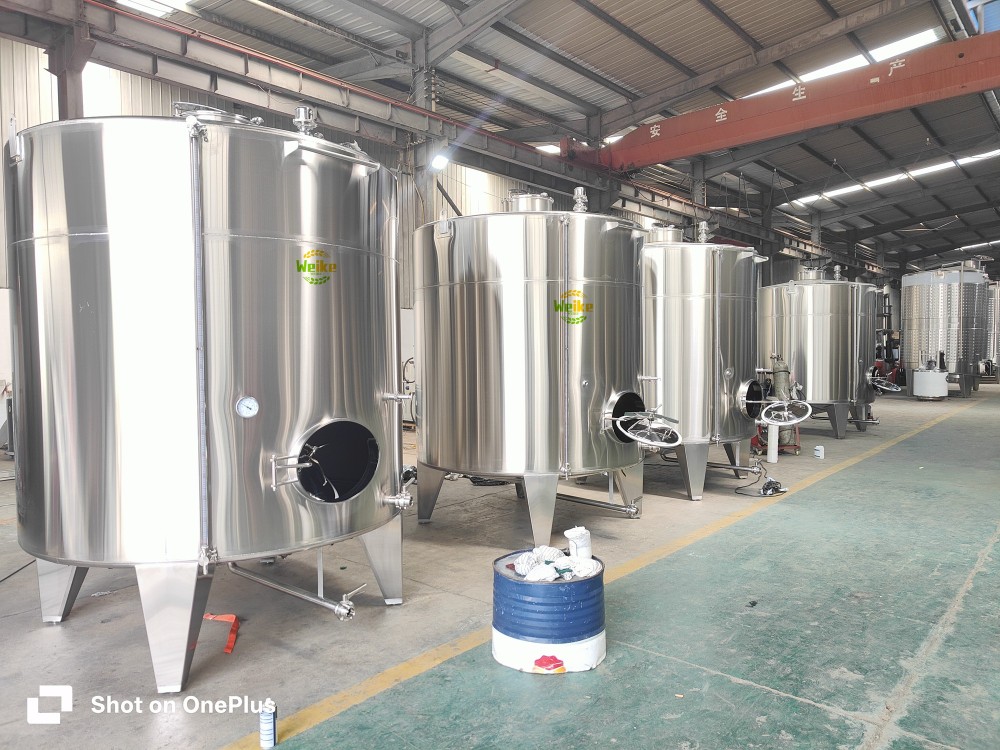
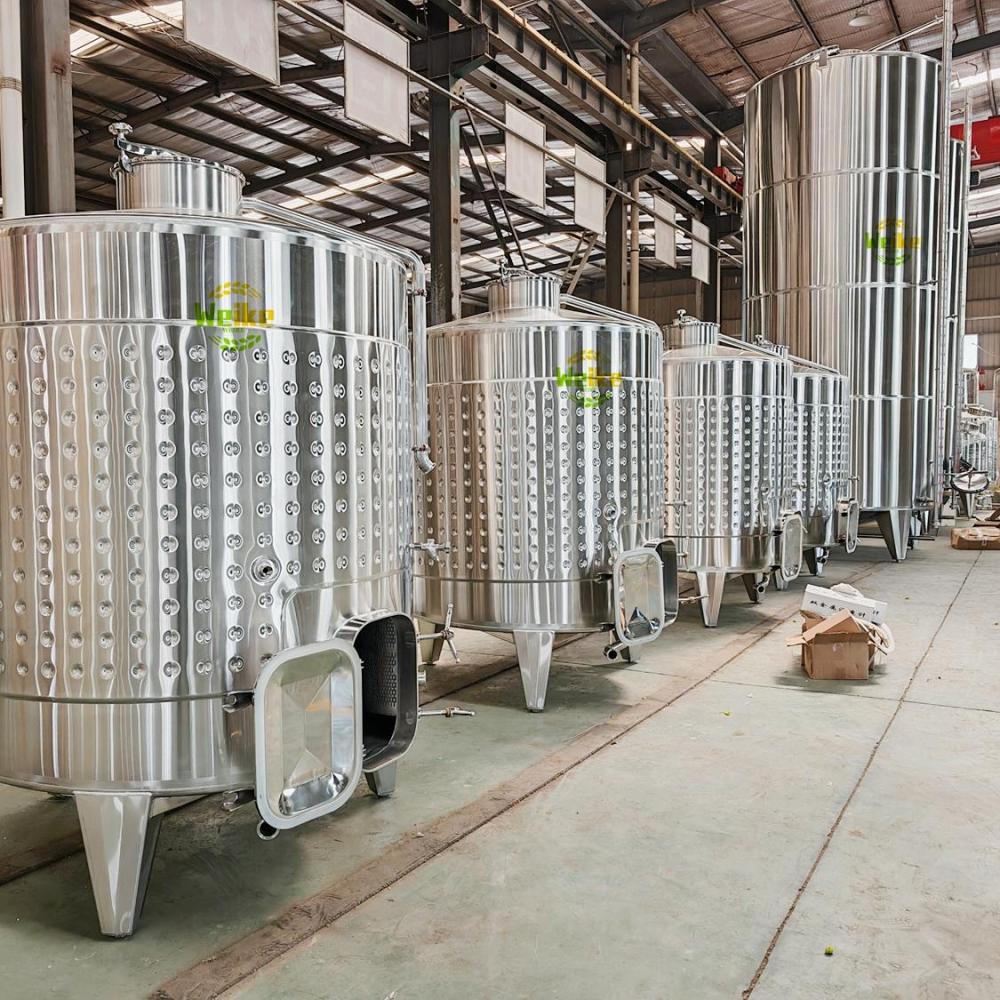
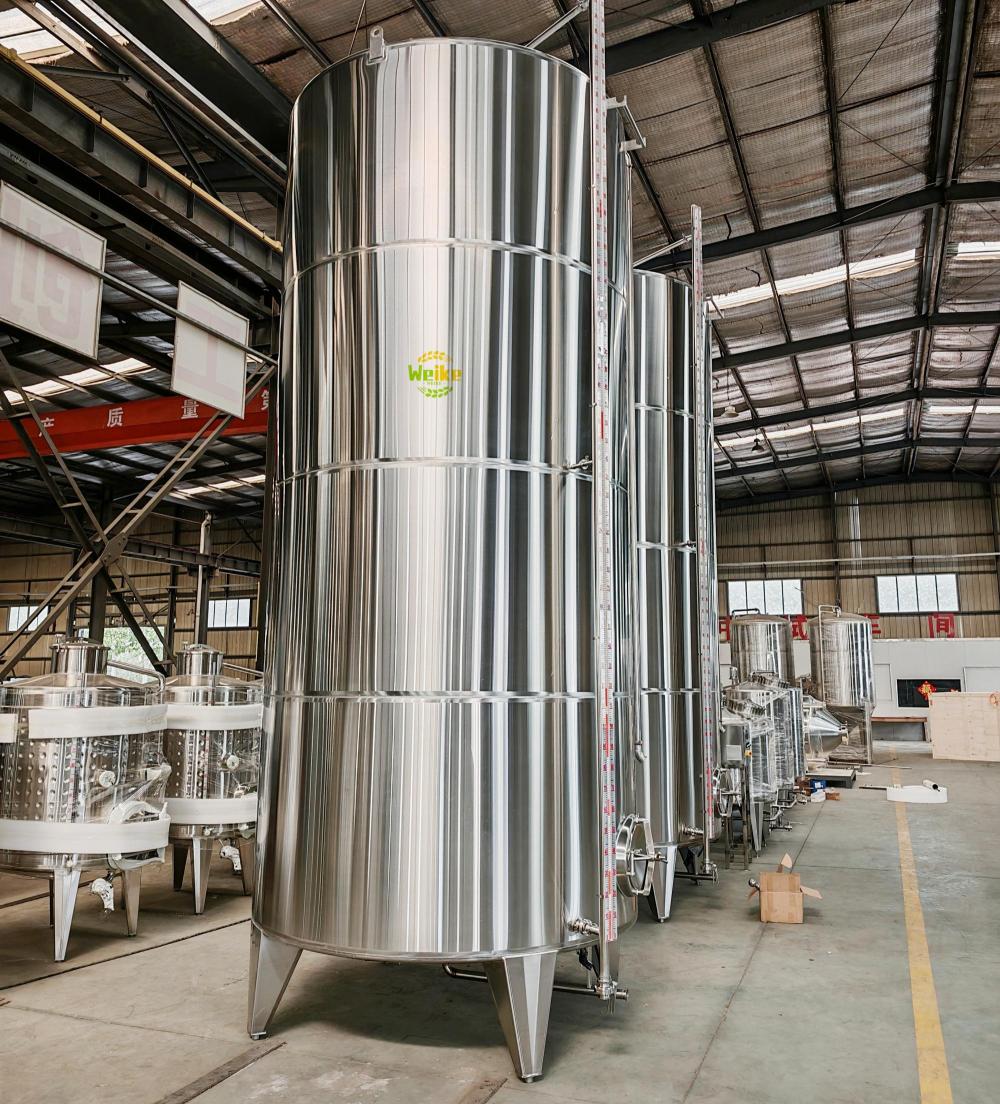
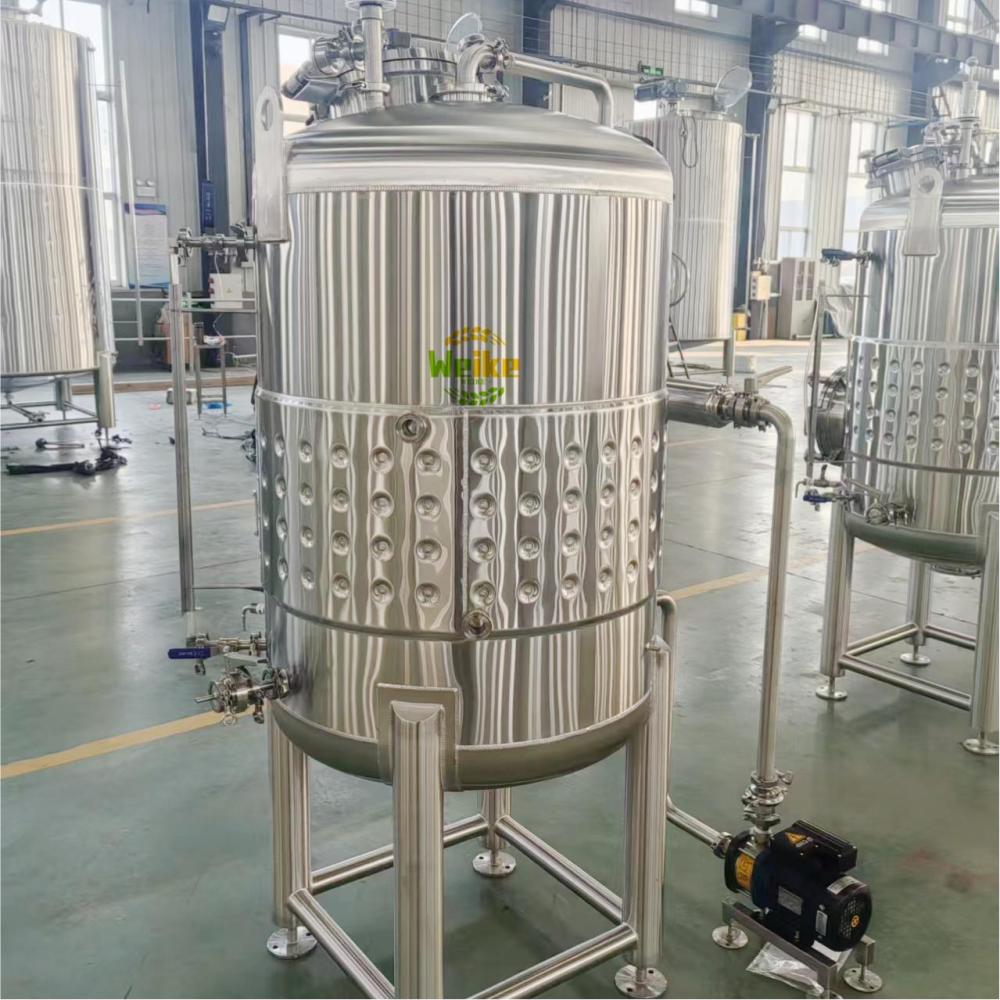
· Fermenters (2000L, 40–60 units mandatory): Double-walled, vacuum-insulated, pressure-rated (5 bar) vessels — hex-zone cooling jackets with independent zone control (top, upper-middle, middle, lower-middle, bottom, and exterior) + automated temperature profiling + CO₂ recovery systems (standard, mandatory for cost savings) + CIP ports (integrated) + redundant cooling systems. Split into core fermenter banks (30–45 units) and premium fermenter banks (10–15 units, isolated) — zero cross-contamination, even with sours and barrel-aged beers.
· Bright Tanks (2000L, 20–30 units mandatory): Pressure-rated (6 bar) + vacuum-insulated + automated carbonation control + cold conditioning (0–4°C for 8–12 weeks) + redundant cooling + integrated CIP — split into core and premium banks, with extended shelf life (12–16 weeks vs. 8–12 weeks for 1000L setups) — mandatory for national distribution and grocery store chains.
· Mandatory Add-Ons: Redundant industrial plate wort chillers (cools 2000L of wort from 100°C to 18°C in 25 mins, even if one chiller fails) + enterprise-grade automated CIP system (redundant chemical tanks, automated mixing, remote monitoring) + fully automated high-speed packaging line (keg/bottle/can/growler, with integrated labeling, coding, case packing, and palletizing) + waste management system (spent grain dryer, trub processing, cleaning chemical recycling) + full-scale quality control lab (with HPLC, GC-MS, and sensory analysis equipment — mandatory for national brand consistency).
· Ultra-Thick Walls + Reinforced Industrial Structural Frames: 3.0–3.5mm wall thickness (vs. 2.5–3.0mm for 1000L) + heavy-duty stainless steel frames with cross-bracing, reinforced legs, and earthquake-resistant design (critical for national breweries with multiple locations in high-risk regions) — prevents bulging under full wort weight (2000L of wort weighs ~2400kg!) and improves vacuum insulation (reduces energy costs by 25% vs. 1000L systems).
· Sanitary Tri-Clamp Fittings (Industrial Grade, 3”–8” Diameter, Standard): All connections use large-diameter tri-clamp fittings — the global standard for industrial breweries (high-flow rate, easy to clean, leak-proof, compatible with all industrial accessories, and designed for high-pressure applications). Redundant fittings are included for all critical connections (no single point of failure).
· Industrial-Grade Valves & Pumps (Redundant, Standard): Sanitary ball/butterfly valves (rated for 30,000+ cycles) + magnetic drive pumps (no seals, no leaks, no contamination) + centrifugal pumps (high-volume transfers) — all redundant (one active, one standby) for critical systems (wort transfer, cooling, CIP) — designed for 24/7 use without failure (vs. 1000L systems’ non-redundant components). Variable speed controls and remote monitoring are standard for all pumps/valves.
· Fully Automated Redundant Dual-Line + Isolated Premium Line Mash/Lauter/Boil Process: The SCADA system automates mash temperature ramps (precise step mashing), vorlauf recirculation rate, sparging volume/speed, boil time, hop additions (timed, automated, precision weight control), whirlpool time, and wort cooling — across two redundant core lines and 1–2 isolated premium lines — reduces human error by 99.5% (vs. 99% for 1000L systems). The system automatically adjusts for variations in grain quality (moisture, protein content) and hop quality (alpha acid levels) to ensure consistent results.
· Industrial Footprint (Scalable for Future Growth): A full setup (redundant dual core lines, 2 isolated premium lines, 60 fermenters, 30 bright tanks, redundant CIP systems, fully automated high-speed packaging line, quality control lab, grain silos, spent grain dryer, waste management system) takes up only 50–60 square meters of floor space — about the size of two large warehouse bays (perfect for urban regional breweries with high rent costs, or rural breweries with plenty of land but limited building space). The layout is designed to be scalable — you can add more core lines, premium lines, fermenters, or packaging capacity without major renovations (critical for industrial-scale growth).
· Industrial-Grade Economies of Scale: Lowest Per-Liter Costs in the Commercial Range (Bar None)This is the biggest commercial advantage of 2000L equipment: economies of scale are at their absolute peak — while absolute energy/water/labor costs are higher than 1000L gear, per-liter costs drop to the lowest point possible in the commercial range (critical for maximizing profit margins on national wholesale, retail, and even international sales). Key efficiency features:
Get a quote
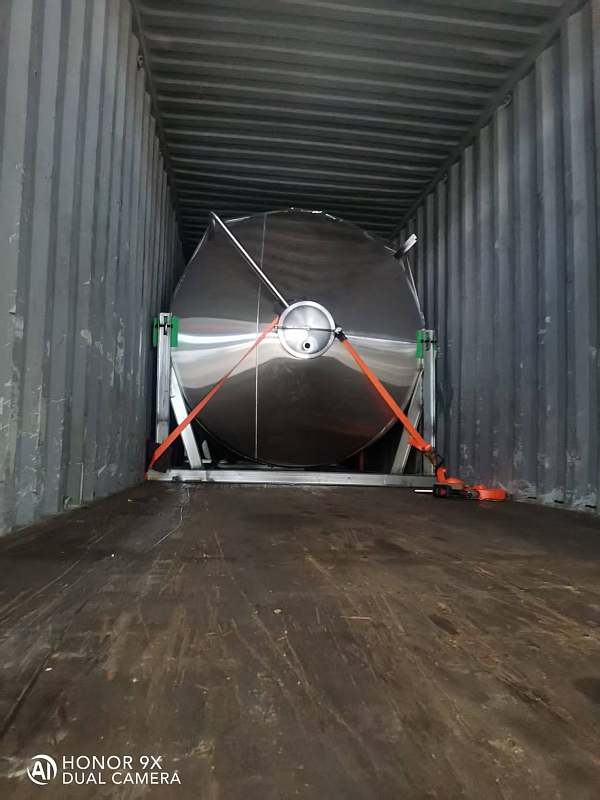
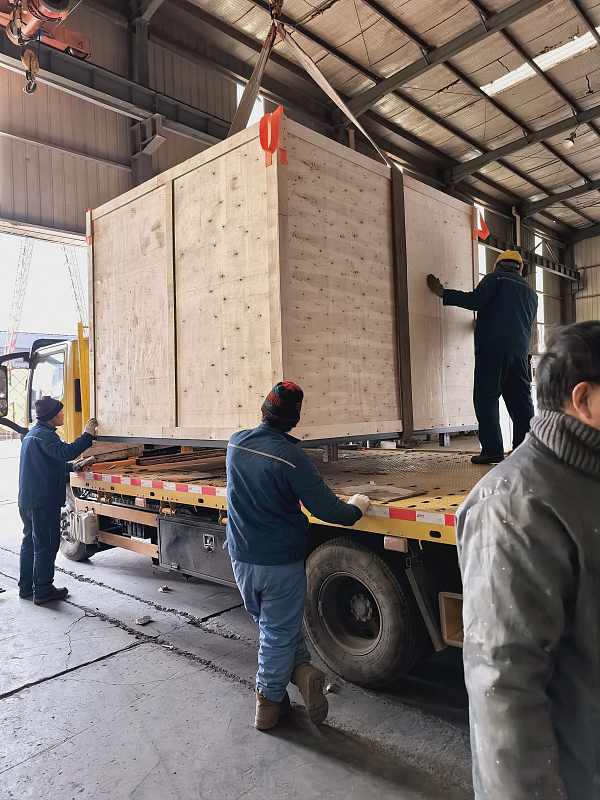
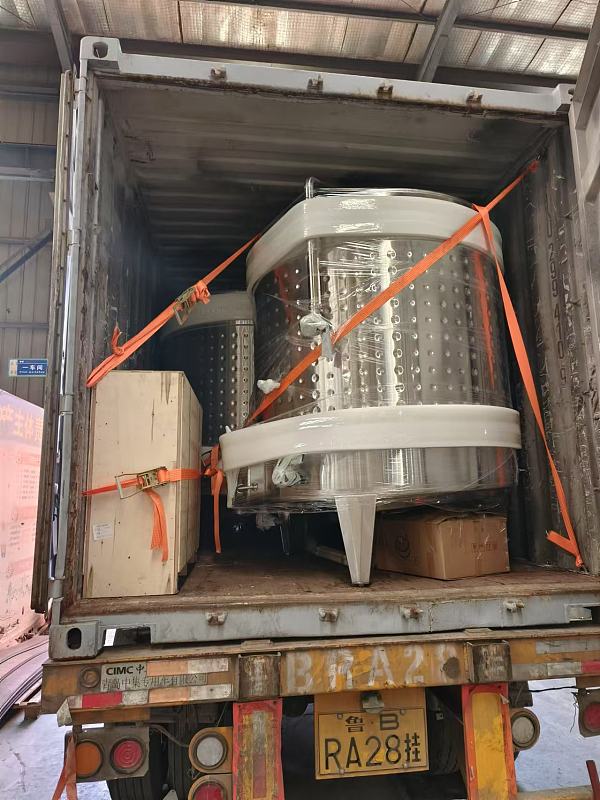
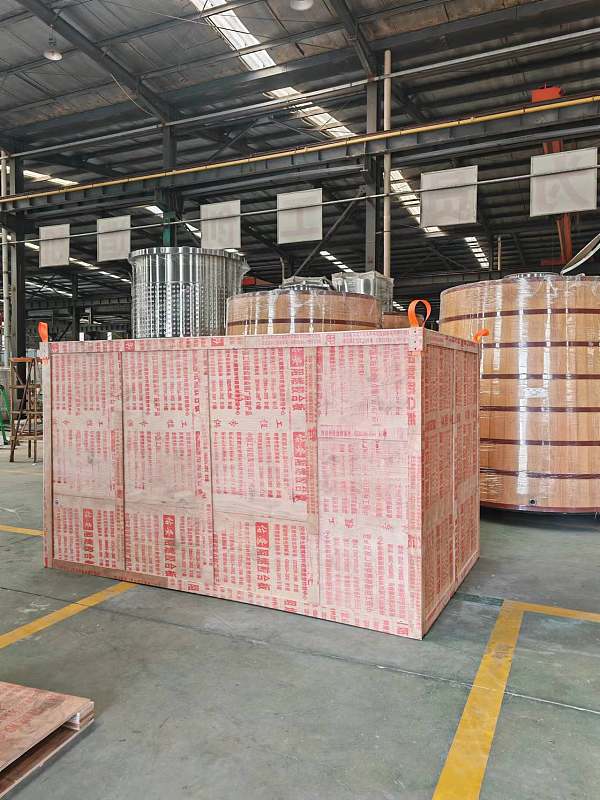
Packing and shipping