PRODUCTS
‹
›
‹
›
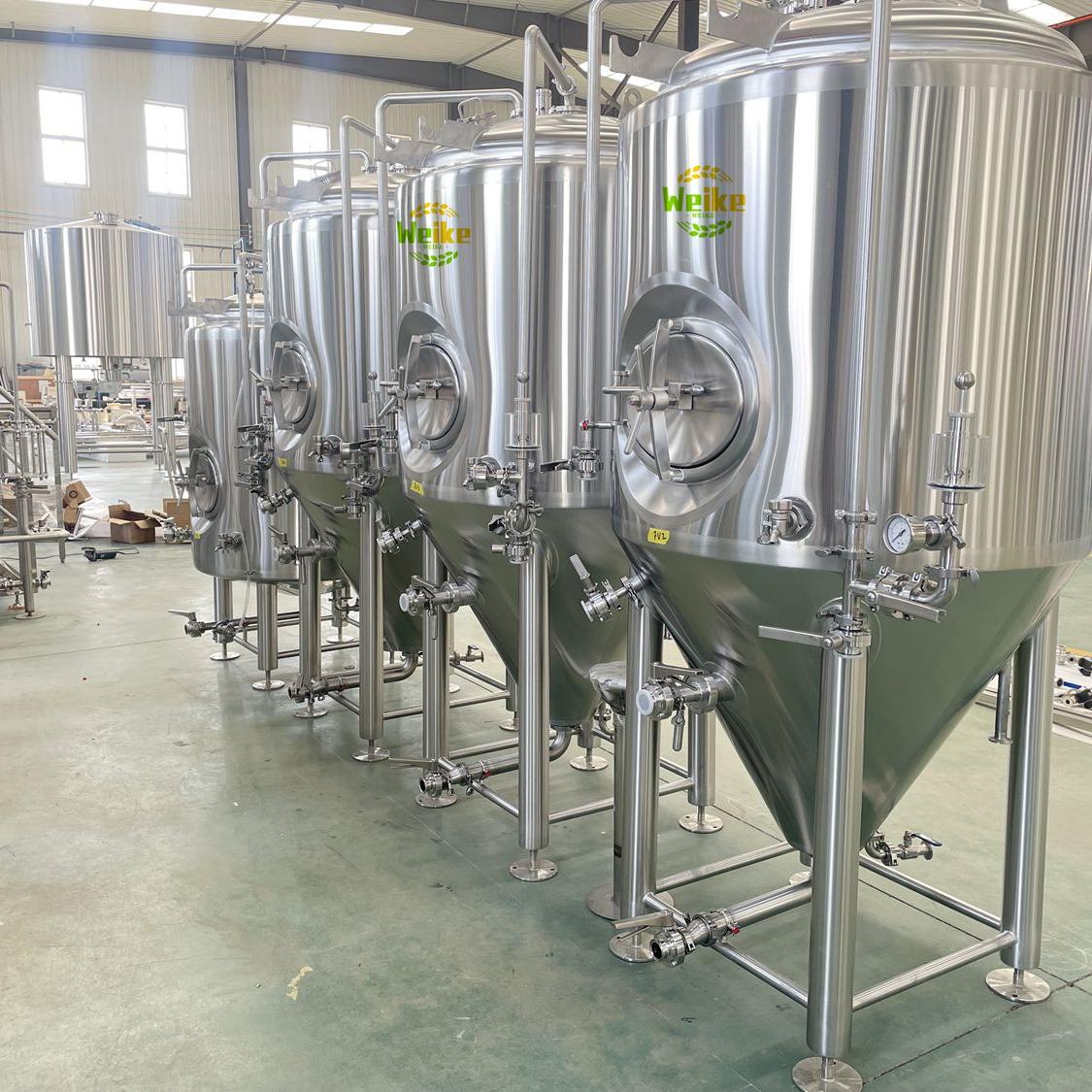
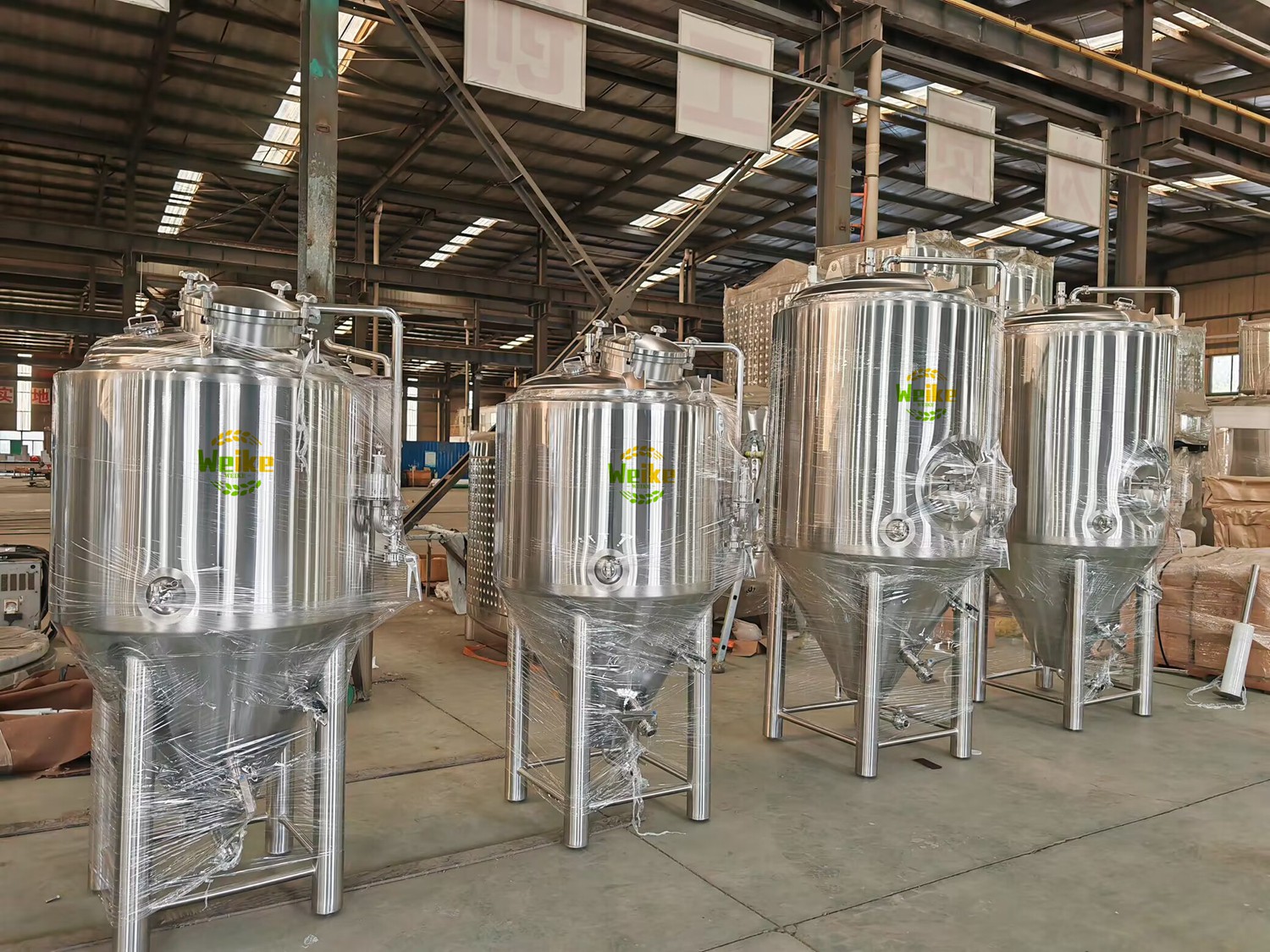
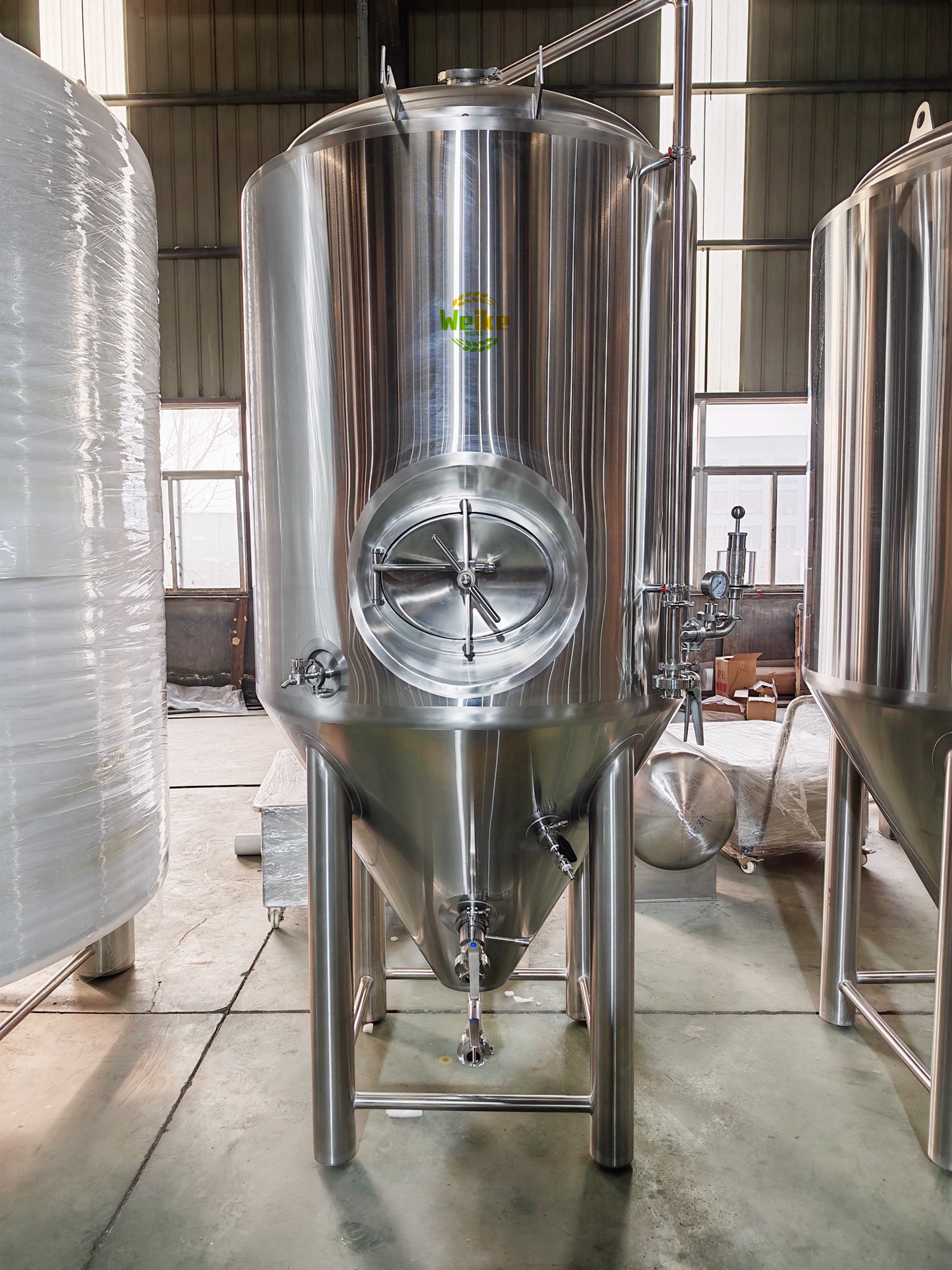
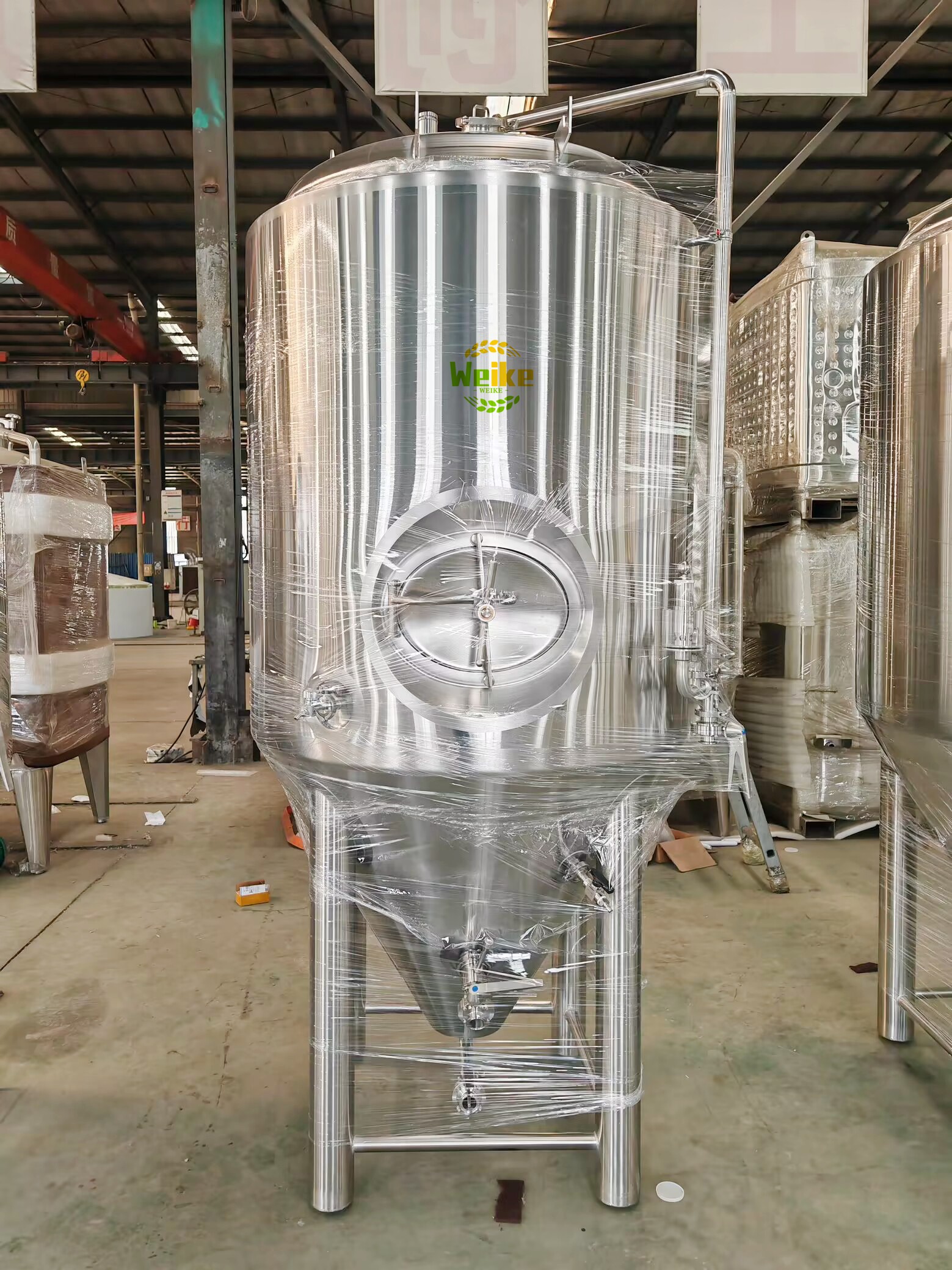
1000L cooling jacketed beer fermenter
2.Effective Volume: customized:1000L
3.Size: can be design according to customer’ space height and door size and container size for shipping.
4.External jacket: Stainless Steel SUS304, thickness is 1.5mm,
5.Inner surface material: Stainless Steel 304/316
PRODUCT DESCRIPTION
1.Material: SUS304 or SUS316L,
2.Effective Volume: customized:1000L
3.Size: can be design according to customer’ space height and door size and container size for shipping.
4.External jacket: Stainless Steel SUS304, thickness is 1.5mm,
5.Inner surface material: Stainless Steel 304/316
6.Cooling way: With glycol cooling jacket, or cooling coil,
7.Washing way: CIP spray ball; In the center of the inside tank
8.Beer way out: With racking arm for beer outlet and drainage valve
9.Welding way: Perfect argon arc welding, Welds are smooth and flat and the arrangements of welds have to be not more than Ra 0.4 μm. Inside and outside polishing processing, No welding dead corner.
10.Control way: each PID controller control temperature each tank, you can set up or adjust temperature via it;
11.Temperature control ways: Platinum resistance thermometer and Direct reading thermometer, display temperature from intelligent data meter
12.Temperature Measurement System: Temperature sensor PT100, temperature display by intelligent data meter.
13 Co2: by using carbonation stone
1000L cooling jacketed beer fermenter
Main features of 1000L cooling jacketed beer fermenter
The beer fermentation tank is one of the indispensable and important equipment in the beer brewing process, which carries the key link of beer brewing.
1. The basic structure of conical fermenter is usually made of stainless steel, with a cylindrical shape and a conical bottom.
2. The fermentation tank contains fermentation liguid, which is related to the raw materials used to make beer.
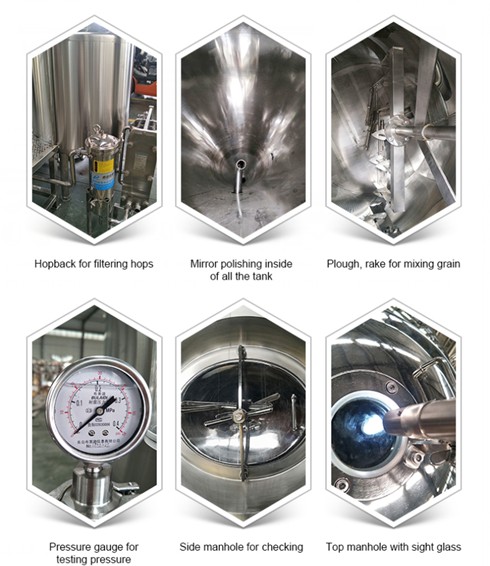
3. The top or side manway of the fermentation tank is equipped with an observation port, making it easy for operators to observe and control the fermentation process.
4. The fermentation process of beer fermentation tank is a very important equipment in the beer brewing process, and the fermentation process inside the tank is the stage of beer fermentation.
5. During the fermentation process, under the action of yeast, substances such as starch and sugar in the fermentation tank are converted into alcohol and carbon dioxide in beer, ultimately forming the final beer product.
6. The maintenance and upkeep of beer fermentation tanks are necessary to ensure efficient beer fermentation and quality. Regular cleaning and upkeep of beer fermentation tanks are necessary.
1. The bottom fermentation tank is designed as a conical shape to facilitate the discharge of yeast at any time during the production process, requiring the use of cohesive yeast. The angle between the conical bottom is generally between 60 º, and the degree of this angle depends on the capacity of the fermentation tank. The height of the conical bottom of the fermentation tank is related to the angle, and the smaller the angle, the higher the conical bottom. The height of the cone bottom of a general can is about 1/4 of the total height, not more than 1/3. The outer wall of the conical bottom should be equipped with a cooling layer to cool the yeast deposited at the conical bottom. The cone bottom should also be equipped with inlet and outlet outlets, temperature sensors, refrigeration jackets, etc. The diameter to height ratio of the tank is usually 1:2 to 1:4, and should not be too high to avoid causing severe convection and affecting the sedimentation of yeast and coagulates
2. The fermentation tank is a cylindrical body, which is the main body of the tank. The height of the fermentation tank depends on the diameter and height of the cylinder. Due to the large diameter and low pressure resistance of the tank, the diameter of a conical tank is generally only 6m. The external part of the tank is used for installing cooling devices and insulation layers, and a certain position is reserved for installing temperature and pressure measuring components. The cooling layer of the tank body has various forms, such as coil, Miller wrench, and jacket, and is divided into 2-3 sections. It is connected to the cooling medium inlet pipe through a pipeline, and the cooling layer is covered with insulation materials such as polyurethane foam plastic.
3. The top of the tank is a circular arch structure, with a central opening for placing a detachable large-diameter flange for installing CO2 and CIP pipelines and their connectors. The top of the tank is also equipped with anti vacuum valves, overpressure valves, and pressure sensors. A washing device is installed on the inside of the tank.
Fermentation tank manhole: The purpose of the manhole is to facilitate access, maintenance, and feeding.
When faced with the choice of "upper manhole" and "side manhole", we also struggle with which one is more suitable? Here, what I want to say to everyone is to choose what suits you. When selecting a manhole, it should be tailored to different locations. For those who are particularly demanding on the height of the site, the upper manhole cannot enter the work, so choosing the side manhole is more comfortable. The height is relatively high. The operator is not convenient to operate, as the top of the fermentation tank is a location where dust is easily accumulated, and the "upper manhole" can be a significant hazard. The "side manhole" sacrifices a portion of the jacket area due to its opening on the side, while the "upper manhole" effectively avoids this drawback. The sacrificial portion of the jacket area theoretically affects the temperature control of the entire fermentation process. Especially for fermentation tanks with relatively small capacity, such as 100L or 500L. Therefore, when selecting equipment, in addition to considering the existing objective conditions, it is also necessary to make judgments based on one's own actual situation. The side manhole has a beautiful appearance, is convenient for cleaning, and is easy to inspect the inside of the fermentation tank. Disadvantages: It is easy to expose alcohol. The longer the use time, the more obvious the problems will be, especially in cleaning and pressure backup, which may result in loose sealing and leakage of CIP water and pressure. The upper manhole will have an advantage in this aspect.
Inner wall polishing and acid pickling passivation: The surface of the inner wall of the fermentation tank should be as smooth and smooth as possible, ensuring that there are no hygiene risks. At present, the treatment of the inner wall of fermentation tanks on the market is generally acid washing and passivation. Some also use mirror polishing treatment, while others directly use brushed steel plates without treatment. But most manufacturers still use acid pickling and passivation treatment. The purpose is to generate a colorless and dense passivation film on the surface of stainless steel after acid washing and passivation, which plays a corrosion-resistant role. Remember that untreated surfaces are not acceptable.
4. Dried hops through the mouth: dry feeding is usually done after the main fermentation. Some of the cans have been sealed for a period of time, and some of the CO2 produced in the fermentation process has been dissolved in the wine body. You may think of putting hops into the wine after the pressure is discharged, but it should be noted that the wine body at this time has some CO2 dissolved, and any abnormal movement may break the calm of the wine body, resulting in a large amount of CO2 gushing out of the wine body, and quickly producing a large number of foam, resulting in a gushing. So it is recommended to create an isobaric dry feeding device, otherwise it will be filled with carbon dioxide later and cause waste.
5.beer outlet: An elbow valve should be added, making it more convenient to pour wine at the bottom. Response valve: positive and negative pressure valve (to prevent vacuum pumping) mechanical pressure water seal regulating valve.
2. Determination of the main dimensions of conical fermentation tanks
1). The diameter to height ratio of a conical tank is cylindrical with a conical bottom, and the ratio of the diameter to the height of the cylinder is 1:1 to 4. The larger the diameter to height ratio, the stronger the natural convection during fermentation, and the faster the fermentation speed of yeast. However, yeast is not easy to settle, making beer difficult to clarify. The ratio of diameter to the total height of wort liquid level should be 1:2, and the ratio of diameter to the height of wort in the cylindrical part should be 1:1 to 1.5.
2). The larger the tank capacity, the longer the full tank time of wort, the more fermentation and proliferation times, and the longer the time, which will cause an increase in the formation of diacetyl precursors, a higher production of diacetyl, and a longer reduction time. In addition, it can also cause extended non production time such as wine production, cleaning, and re feeding of wort, as well as high peak periods of cold usage, resulting in a shortage of cooling supply. Due to the release of carbon dioxide and the generation of foam, the effective volume of the tank is generally about 80% of the total tank volume.
3). The cone angle is generally between 60 ° and 90 °, and is commonly used between 60 ° and 75 ° (stainless steel tanks usually have a cone angle of 60 °, while steel tanks with coatings have a cone angle of 75 °) to facilitate yeast settling and separation.
Get a quote
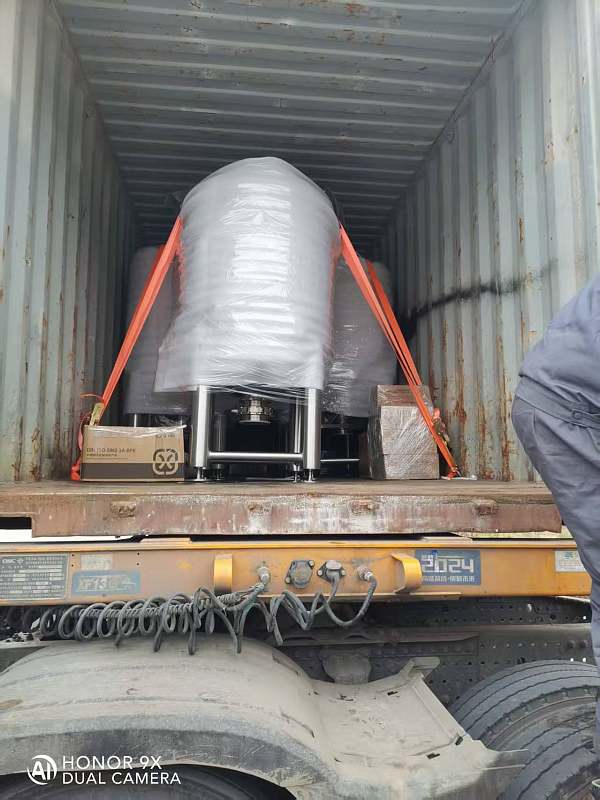
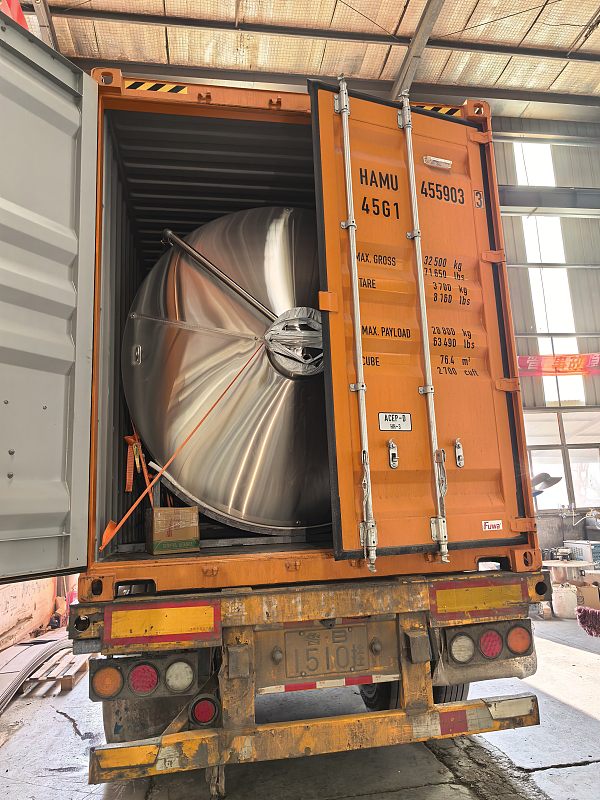
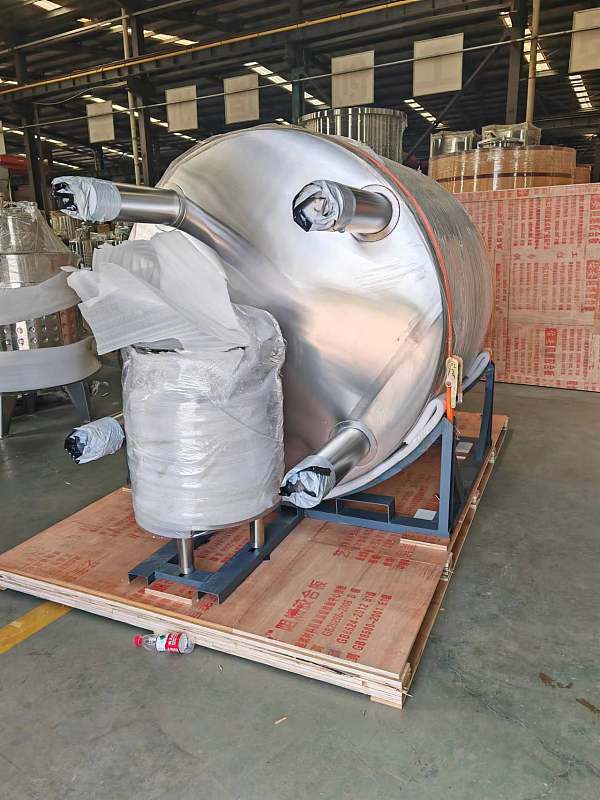
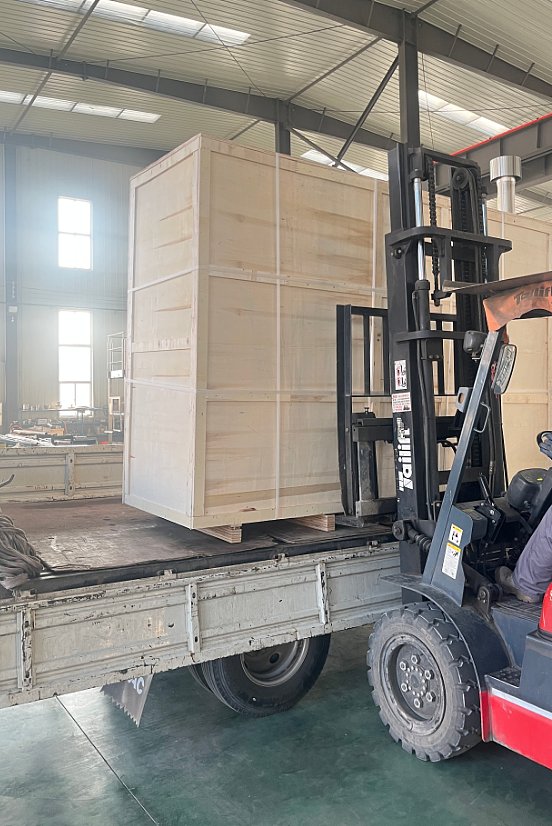
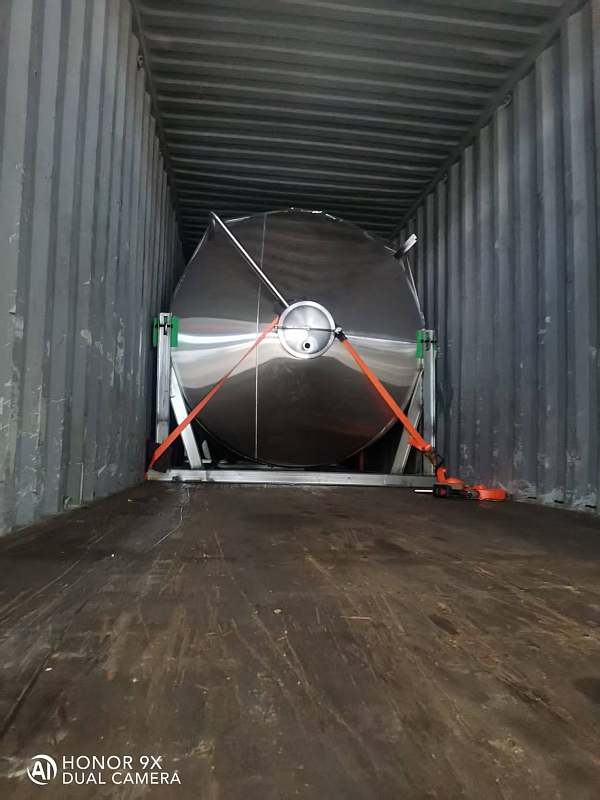
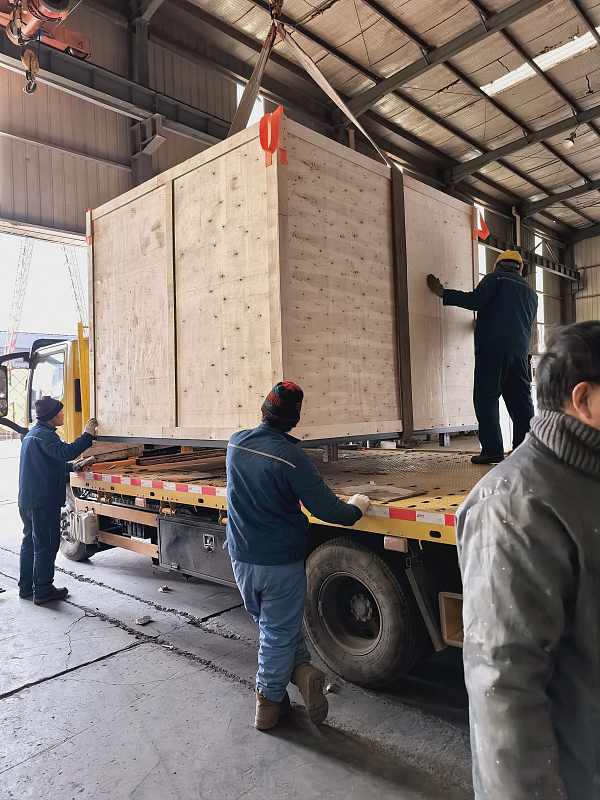
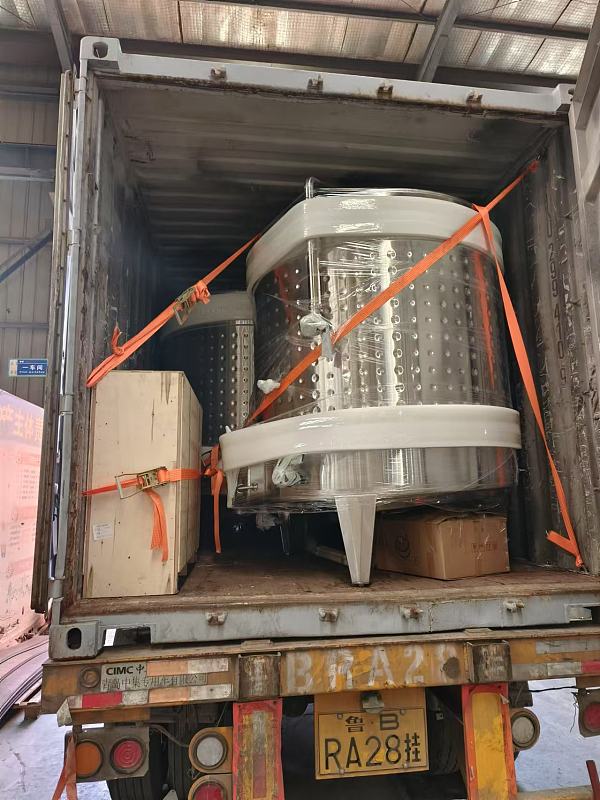
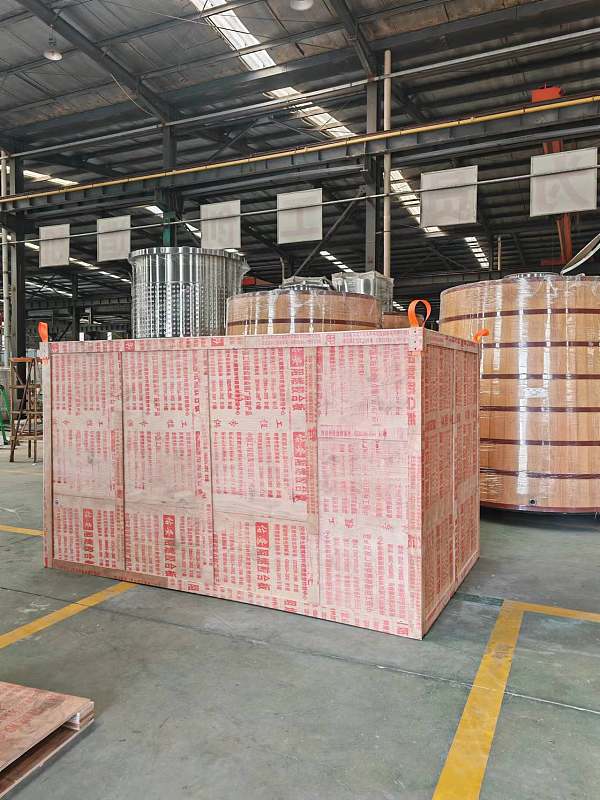
Packing and shipping