


NEWS
Types of edible oil tanks and how to choose right edible oil tanks?
Types of edible oil tanks and how to choose right edible oil tanks?
Edible oil tanks are specialized containers designed for the safe, hygienic storage of cooking/vegetable oils, built to prevent contamination, oxidation, and structural failure while complying with strict food safety standards. Here’s a comprehensive breakdown:
Common Materials & Grades
1. Stainless Steel (304/316/316L): The gold standard. 304 is for general edible oil storage; 316/316L offers enhanced corrosion resistance for coastal/humid areas or aggressive cleaning. All must be food-grade certified (e.g., FDA, GB 4806).
2. Carbon Steel with Food-Grade Lining: Economical for large-scale ambient storage, but requires epoxy or glass-fused linings to avoid rust contamination.
3. Glass-Fused Steel: Combines steel’s strength with glass’s inertness, good for long-term outdoor storage.
4. Food-Grade Plastic (HDPE): Used for small, portable tanks; not ideal for high-temperature or long-term storage.
Tank Types & Configurations
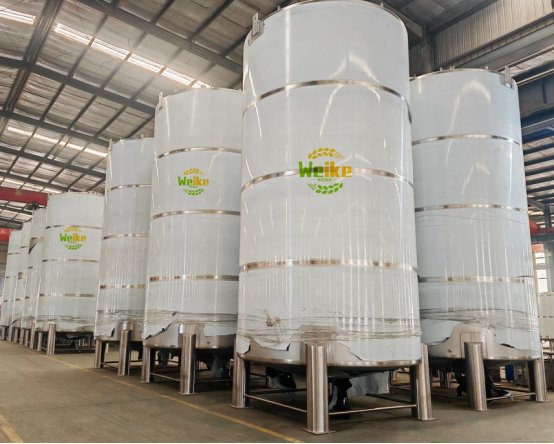
-Vertical Tanks: Tall cylinders, small footprint, ideal for large-capacity industrial storage (10,000 L+). Often with fixed or floating roofs, cone bottoms for easy drainage.
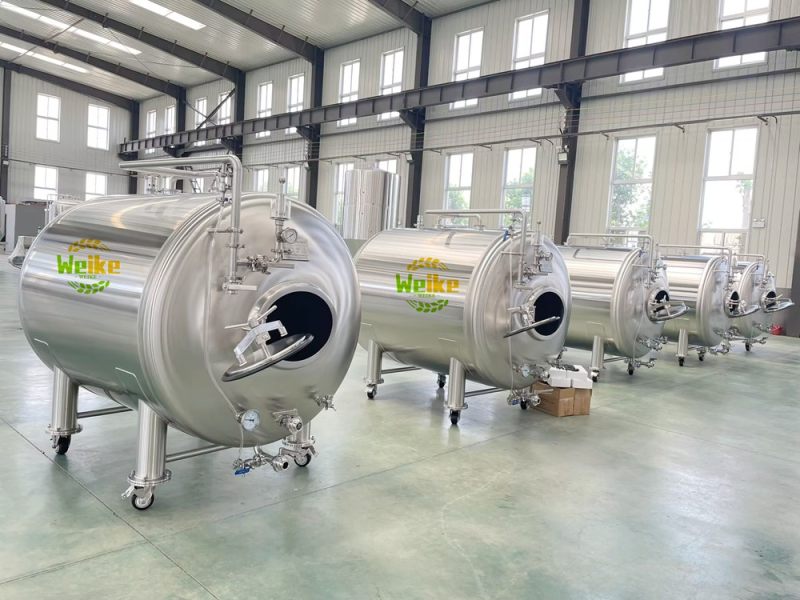
-Horizontal Tanks: Shorter, longer cylinders, easy to install/maintain, common for mid-small capacities (restaurants, small plants).
· Jacketed/Insulated Tanks: For temperature-sensitive oils (e.g., palm oil, which solidifies at room temp). Jacket allows heating/cooling to keep oil pumpable; insulation prevents temperature swings.
· Pressurized vs Atmospheric: Most edible oils use atmospheric tanks. Pressurized may be used for nitrogen-blanked storage to reduce oxidation.
Key Design & Safety Features
1. Food-Grade Seals & Valves: Silicone, PTFE gaskets; no toxic materials in contact with oil.
2. Nitrogen Blanketing: Displaces oxygen to slow oxidation/rancidity.
3. Leak Detection & Overfill Protection: Sensors, emergency vents, secondary containment (bunds) to catch spills.
4. CIP (Clean-in-Place) Systems: For industrial tanks, enabling automated, thorough cleaning without manual entry.
5. Ventilation: Breathers with filters to prevent dust/moisture ingress.
Standards & Compliance
· International: FDA (USA), EU 10/2011 for food contact materials.
· China: GB 4806 (food-grade materials), GB/T 37509 (transport tanks), GB 44917 (bulk edible oil transport hygiene).
Maintenance Best Practices
1. Regular inspection of linings, welds, valves for damage/corrosion.
2. Strict cleaning protocols between oil batches to avoid cross-contamination.
3. Temperature monitoring to prevent oil degradation or solidification.
4. Record-keeping for all maintenance, cleaning, and oil transfers to ensure traceability.
Selection Tips
· Choose 304 stainless steel for general storage; 316 if in coastal/humid regions.
· For palm oil, prioritize jacketed, heated tanks to maintain liquid state.
· Always verify the tank has food safety certifications for all wetted parts.
Would you like me to help you size an edible oil tank based on your daily consumption and storage duration?
How to choose the appropriate edible oil tank?
Choosing the right edible oil tank depends on your storage scale, oil type, budget, and local conditions. Below is a step-by-step guide to help you select the most suitable one:
1. Determine Storage Capacity & Usage Scenario
First, calculate the total volume of edible oil you need to store and how long you plan to store it. This will narrow down the tank size and type:
· Small-scale (household/restaurant): 50L–5,000L. Choose horizontal stainless steel tanks or food-grade plastic barrels/tanks (portable, easy to install).
· Medium-scale (edible oil processing plant/wholesaler): 5,000L–50,000L. Choose vertical stainless steel tanks or glass-fused steel tanks (large capacity, stable structure).
· Large-scale (industrial/port terminal): 50,000L+ (50m³–5,000m³). Choose large vertical stainless steel tanks or fixed-roof/ floating-roof tanks (cost-effective for bulk storage).
2. Select the Right Material
The material directly affects food safety, corrosion resistance, and lifespan. Prioritize food-grade materials:
· 304 Stainless Steel: The most common choice for edible oil storage. It is corrosion-resistant, easy to clean, and meets food safety standards (FDA/GB 4806). Suitable for most oils (soybean, rapeseed, sunflower oil).
· 316/316L Stainless Steel: Higher corrosion resistance than 304. Ideal for coastal areas, humid environments, or storing oils with mild acidity.
· Glass-Fused Steel Tanks: Combine steel strength with glass’s inertness. Resistant to rust and corrosion; suitable for outdoor large-scale storage.
· Food-Grade HDPE Plastic: Lightweight and low-cost, but only for small/medium capacity and short-term storage (not suitable for high-temperature or long-term storage).
· Carbon Steel with Food-Grade Lining: Economical for large tanks, but requires a strict food-grade epoxy/glass lining to avoid rust contamination.
Recommendation: For most cases, 304 stainless steel is the best balance of safety, durability, and cost.
3. Consider the Type of Edible Oil
Different oils have different storage requirements, which affect tank design:
· Liquid Oils (soybean, corn, peanut oil): Use ordinary atmospheric tanks (no special heating required).
· Solidifiable Oils (palm oil, coconut oil): Choose jacketed/insulated tanks with heating systems (to keep the oil liquid and pumpable).
· High-Value/Oxidation-Sensitive Oils (extra virgin olive oil): Add nitrogen blanketing systems to displace oxygen and slow rancidity.
4. Evaluate Environmental & Safety Conditions
· Location (indoor/outdoor): Outdoor tanks need insulation, UV protection, and rain/snow shielding. Indoor tanks can be simpler.
· Corrosion Risk: Coastal areas/humid regions → 316 stainless steel or glass-fused steel. Inland/dry areas → 304 stainless steel is sufficient.
· Safety Requirements: Equip tanks with overfill protection, leak detection, emergency vents, and secondary containment (bunds) to prevent spills and accidents.
· Cleaning Needs: Industrial plants should choose tanks with CIP (Clean-in-Place) systems for automated, hygienic cleaning.
5. Budget & Maintenance
· Cost Ranking (from high to low): 316 stainless steel > 304 stainless steel > glass-fused steel > carbon steel lined > food-grade plastic.
· Maintenance: Stainless steel tanks are easy to maintain (only regular cleaning and inspection). Glass-fused steel tanks have low maintenance costs but require careful handling to avoid glass coating damage.
6. Comply with Food Safety Standards
Ensure all wetted parts (tank body, valves, gaskets) have food-grade certifications (e.g., GB 4806 in China, FDA in the USA, EU 10/2011 in Europe). Avoid tanks with toxic coatings or materials that may contaminate the oil.
Maintaining and cleaning edible oil tanks properly is critical to ensuring food safety, extending the tank’s service life, and preventing oil rancidity or contamination. Below is a step-by-step, practical guide for daily, regular, and deep cleaning/maintenance of edible oil tanks (stainless steel as the main material, the most common type for food-grade storage).
I. Preparations Before Cleaning/Maintenance
1. Empty the tank completely: Drain all residual oil first, and collect it for proper storage/processing to avoid waste.
2. Isolate the system: Close all inlet/outlet valves, cut off the power supply of heating/agitation systems (if any), and hang “under maintenance” warning signs.
3. Prepare tools and materials:
1. Cleaning tools: Soft brushes (nylon/non-metallic), high-pressure water gun, rag, scraper (plastic, no metal to avoid scratching the tank lining).
2. Cleaning agents: Food-grade alkaline detergent (e.g., food-grade sodium hydroxide solution), food-grade acid detergent (for scale), clean hot water (≤60°C, avoid high temperature to prevent oil residue caking), sterile dry cloth/paper.
3. Protective gear: Gloves, goggles, masks (for chemical cleaning).
4. Ventilate the tank: Open the manhole and ventilation valves to ensure air circulation, and avoid confined space hazards (test oxygen content with a detector if needed).
II. Daily Maintenance (Daily/Weekly)
Daily maintenance focuses on preventing contamination, checking for abnormalities, and keeping the tank clean on the surface:
1. Surface cleaning: Wipe the outer wall of the tank, valves, and pipelines with a clean dry cloth to remove dust, oil stains, and water droplets; check for rust, corrosion, or damage to the outer coating (touch up paint if needed).
2. Check sealing parts: Inspect gaskets, valves, and manhole covers for looseness, aging, or leakage; replace damaged food-grade gaskets (silicone/PTFE) in time.
3. Monitor storage conditions: For temperature-controlled tanks (e.g., palm oil), check the heating system regularly to ensure the oil temperature is stable (avoid overheating or solidification); for ordinary oil tanks, check the oil level and ensure no foreign matter enters.
4. Prevent cross-contamination: If switching oil types, clean the tank and pipelines first to avoid residue mixing.
III. Regular Deep Cleaning (Monthly/Quarterly/Annually)
Deep cleaning is required when the tank is emptied, and the frequency depends on usage:
· Monthly: For tanks with frequent oil changes or high hygiene requirements (e.g., food processing plants), perform a simple rinse with hot water and food-grade detergent.
· Quarterly/Annually: For tanks with long-term storage or low-frequency use, perform a comprehensive deep clean (including inner wall, manhole, and pipeline interfaces).
Step 1: Rinse with hot water
· Pour clean hot water (50–60°C) into the tank, fill 1/3 to 1/2 of the volume, and agitate (if the tank has an agitation device) or manually scrub the inner wall, bottom, and manhole with a soft brush to dissolve loose oil residue.
· Drain the dirty water completely, and repeat 2–3 times until the water is clear.
Step 2: Clean with food-grade detergent
· Prepare a dilute food-grade alkaline detergent solution (follow the manufacturer’s instructions, usually 1%–2% concentration) and pour it into the tank.
· Agitate or scrub the inner wall thoroughly, let it soak for 10–15 minutes to decompose stubborn oil stains and organic residues.
· Drain the detergent solution, then rinse with clean hot water repeatedly until no detergent residue remains (test with pH test paper to ensure neutrality).
Step 3: Disinfect (if needed)
· For tanks with high hygiene requirements (e.g., edible oil refineries), use a food-grade disinfectant (e.g., dilute peracetic acid solution, follow food safety standards) to disinfect the inner wall, soak for 5–10 minutes, then rinse with clean water thoroughly.
· Note: Do not use toxic disinfectants (e.g., chlorine-containing strong disinfectants) that may remain in the tank and contaminate oil.
Step 4: Dry the tank
· Open all manholes and ventilation valves, and air-dry the tank naturally for 4–6 hours (or use a sterile air blower for quick drying). Ensure the inner wall is completely dry to prevent mold or bacteria growth.
· Inspect the inner wall: Check for scratches, rust, or peeling of the lining; repair minor scratches with food-grade epoxy paint; replace severely damaged tanks/lining.
IV. Special Maintenance for Special Oil Tanks
1. Jacketed/insulated tanks (for palm oil/coconut oil):
o After cleaning, check the heating jacket for leakage or blockage; ensure the insulation layer is intact to prevent heat loss.
o Before refilling oil, preheat the jacket to melt residual solid oil, then clean thoroughly.
2. Nitrogen-blanketed tanks:
o After cleaning, re-inject nitrogen to displace air before refilling oil to reduce oxidation.
o Check the nitrogen pressure gauge regularly to ensure the blanketing effect.
3. Large vertical stainless steel tanks:
o Inspect the tank foundation and support structures regularly to ensure stability; check the floating roof (if equipped) for flexibility and sealing.
V. Key Notes for Food Safety
1. No toxic materials: All cleaning tools and agents must be food-grade; avoid metal scrapers, strong corrosive chemicals (e.g., industrial hydrochloric acid), or toxic solvents.
2. Prevent secondary contamination: Clean tools should be stored in a clean, dry place; the tank manhole should be covered with a sterile dustproof cover after cleaning.
3. Record-keeping: Log cleaning time, methods, and inspection results for traceability (required by food safety regulations).
4. Avoid high-temperature cleaning: Do not use boiling water or high-temperature steam (>80°C) to clean stainless steel tanks, as it may cause oil residue to carbonize and adhere tightly.
VI. Troubleshooting Common Problems
· Oil residue caking: Soak with hot alkaline detergent first, then scrub with a soft brush; do not use sharp tools to scrape.
· Tank rust (304 stainless steel): Caused by chloride ion corrosion (e.g., seawater) or mechanical scratches. Polish the rust spot with food-grade stainless steel polish, then coat with food-grade protective paint.
· Pipelines blocked by oil residue: Disassemble the pipelines for cleaning, or use hot water circulation to flush.
By following these steps, you can ensure the edible oil tank is always in a hygienic and safe state, protecting the quality of the oil and extending the tank’s service life.